
ElevenReader is the reading app from ElevenLabs, the AI voice company. It reads your PDFs, Word files, EPUB books and saved articles aloud in natural-sounding voices, and it doubles as an audiobook app. Its free plan includes 10 hours of text-to-audio a month, which makes it an easy way to try getting through a reading list by ear.
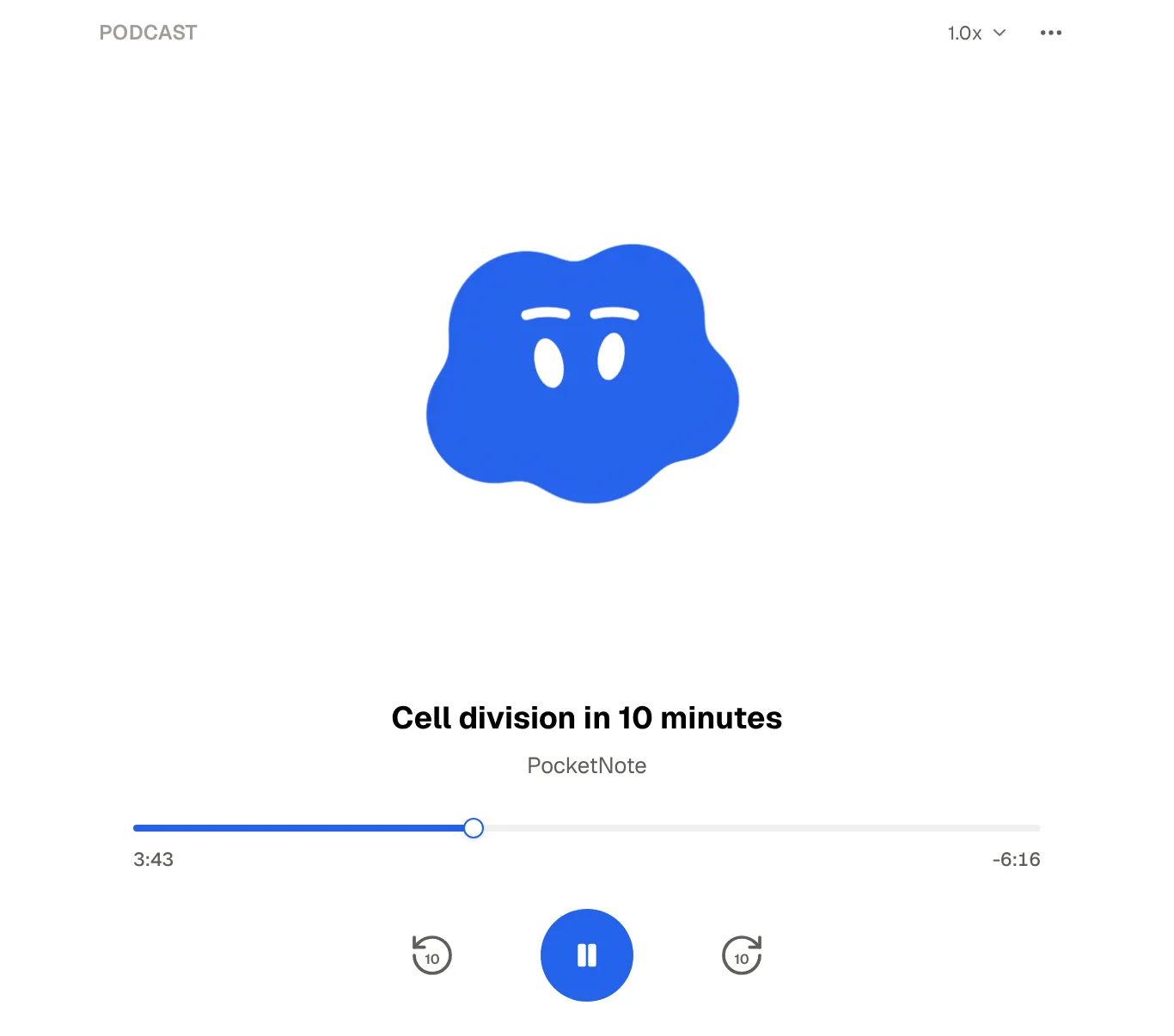
PocketNote is an AI study app. It takes the same kinds of files and turns them into study material: notes and summaries, flashcards with spaced repetition, quizzes that explain every answer, and a podcast-style audio review with captions. Its audio is about your material rather than a reading of it.
Both, then, will put a chapter in your ears, but they are built for different moments. ElevenReader is for the first pass through a text. PocketNote is for what you do once you have read it. This page compares them using ElevenReader's own site in November 2026, and spells out when each is the better pick.
At a glance
PocketNote vs ElevenReader
| Feature | PocketNote | ElevenReader |
|---|---|---|
| Core job | Turning material into study tools | Reading text aloud; audiobooks |
| Files | PDF, Word, Excel, CSV, TXT, Markdown, audio | PDF, DOCX, EPUB, Markdown, TXT |
| EPUB e-books | Not among its import formats | Yes |
| What you hear | Podcast-style review with captions | Narration of the full text |
| Audiobook library | Not offered | Free titles; premium titles on Ultra |
| Flashcards with spaced repetition | Yes: Again / Hard / Good / Easy | Not advertised |
| Quizzes | Yes, every answer explained | Not advertised |
| AI chat about the text | Poki, with citations | Not advertised |
| Offline | Notes save offline and sync later | Offline listening on Ultra |
| Your content and AI training | Not used to train public AI models | Not used to train public or third-party models |
| Apps | Web, iPhone, iPad | Web, iOS, Android |
| Price | Free to start; see pocketnote.app | Free 10 hours a month; Ultra $99 a year |
Checked against each product's own website, November 2026. Plans and features change; confirm current details there.
What ElevenReader does
ElevenReader reads your own files aloud. Its site lists PDF, DOCX, EPUB, Markdown and TXT, plus articles imported from a link, text scanned from an image and pasted text. You choose from more than 1,000 voices, adjust the speed, and listen on iOS, Android or the web, with free accounts syncing between web and mobile.
It is also an audiobook app. The free plan includes thousands of free audiobooks, and the paid Ultra plan adds a premium catalogue with a monthly allowance of listening hours. For a student, the audiobook side is a bonus; the reason to install it is your own reading.
Because it comes from ElevenLabs, the voices are the selling point. Long listening sessions are easier when the narration sounds natural, and ElevenReader gives you a wide choice of narrators across many languages. Ultra users can also design a narrator from a text prompt and create custom voices.
One limit is worth knowing. ElevenReader is for personal listening, and its site says you cannot export audio from the app; for that it points you to the ElevenLabs web platform or the ElevenLabs mobile app. If you were hoping to turn a reading into an MP3 for another app, plan around that.
A generous free plan, read closely
At the time of writing (November 2026), ElevenReader's pricing page gives free users 10 hours of text-to-audio a month, resetting monthly, with all 1,000-plus voices, speeds up to 4x, a sleep timer, bookmarks and sync between web and mobile. Its homepage puts 10 hours at roughly a 400-page book. That is a fair amount of listening before you need to pay anything.
Ultra is listed at $11 a month, or $99 a year, which the page shows as $8.25 a month billed annually. It adds unlimited text-to-audio for your imports, offline downloads, custom voices, smart file imports that skip headers, footers and filler text, and 20 hours of premium audiobooks a month. There is a 3-day free trial.
Its FAQ says ElevenReader does not currently offer dedicated discounts for students, educators or non-profits. It also says your content is processed securely and not shared or used to train public or third-party models, which matters if you are uploading course packs or drafts.
GenFM and PocketNote's audio reviews
ElevenLabs added a feature called GenFM to ElevenReader in November 2024. Its announcement describes it as generating personal podcasts from your PDFs, articles, e-books and documents, with two AI co-hosts, in 32 languages. The current ElevenReader site and app listing lead with reading and audiobooks rather than GenFM, so check the app if that feature is the reason you are interested.
PocketNote's audio review is the comparable feature on its side. It is a podcast-style episode about your material, with captions that follow the voices so you can read along, a scrubber and a speed control. It is generated from the material in your library, the same sources your flashcards and quizzes come from.
The difference that matters for studying is what surrounds the episode. In PocketNote it sits next to the flashcards, quiz and mind map made from the same material, and listening to it counts toward your progress in the study plan. It is one tool in a revision routine rather than the end point.
Listening is the first pass, not the last
Hearing a chapter once, however pleasant the voice, is a light form of studying. Most of it fades unless you come back to it and try to recall it, and practising recall at spaced intervals is one of the more reliable findings in learning research. That is the gap between a reader and a study app.
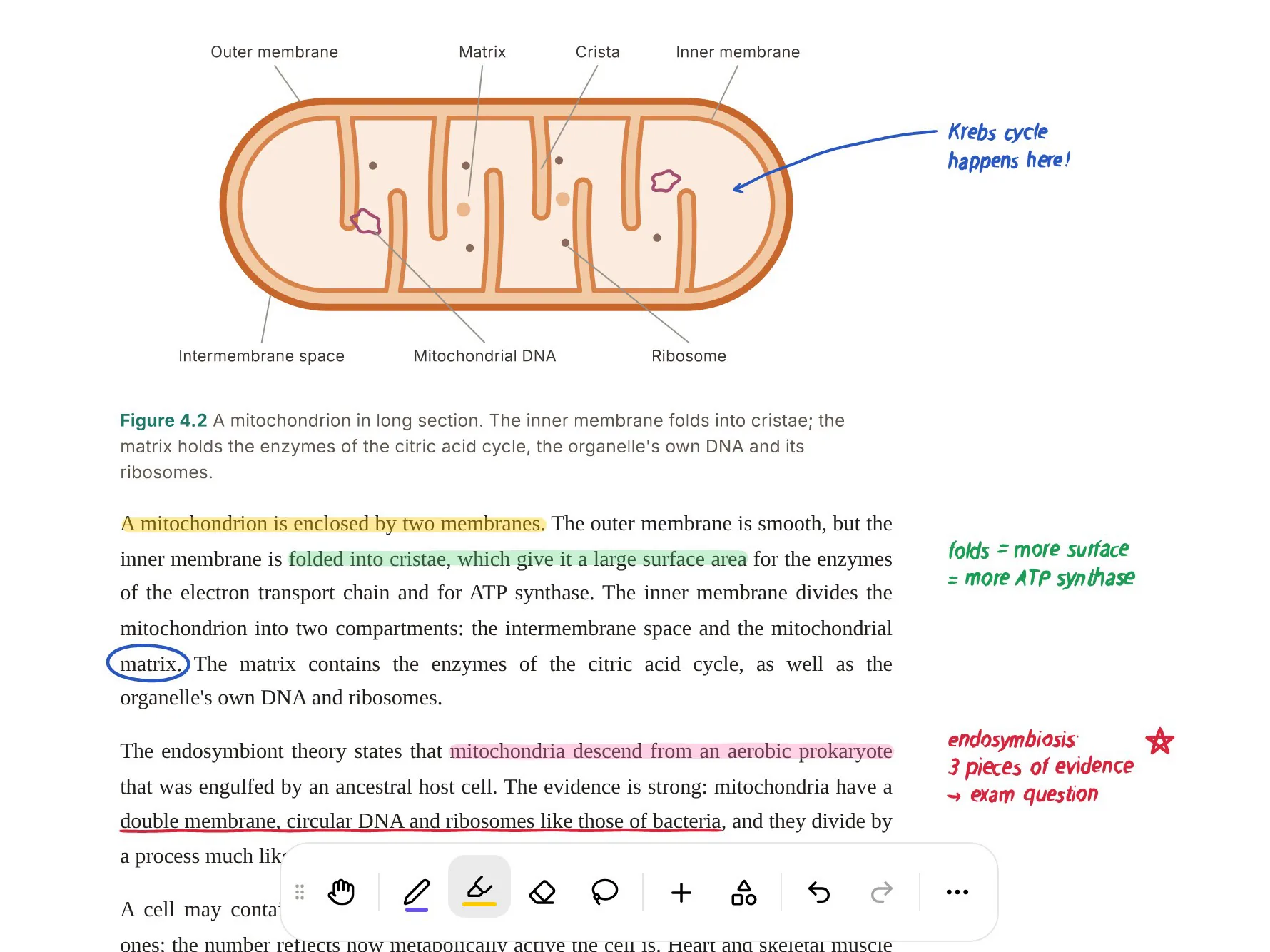
PocketNote fills it with tools made from the same PDF you listened to. Flashcards come back on a schedule: rate each one Again, Hard, Good or Easy and it returns when you are about to forget it. Quizzes explain why the right answer is right and why each wrong one is wrong. A study plan works back from your exam date and tracks memory, applied and mastery scores.
ElevenReader does not advertise flashcards, quizzes or chat, and its site is clear about what it is: a way to listen to anything in voices you like. Using it for the first read and PocketNote for review is a reasonable split. None of this is a criticism of listening; it is a reminder that the first read is where studying starts.
Asking about the reading, and being asked
When a passage does not make sense, a reader can only repeat it. In PocketNote you can ask Poki, its AI, what the passage means. Poki answers from your own material with citations to the source, can look at the PDF page as you see it, including your highlights, and, when you ask, can highlight, underline or circle the passage it is talking about. You can undo its marks in one tap.
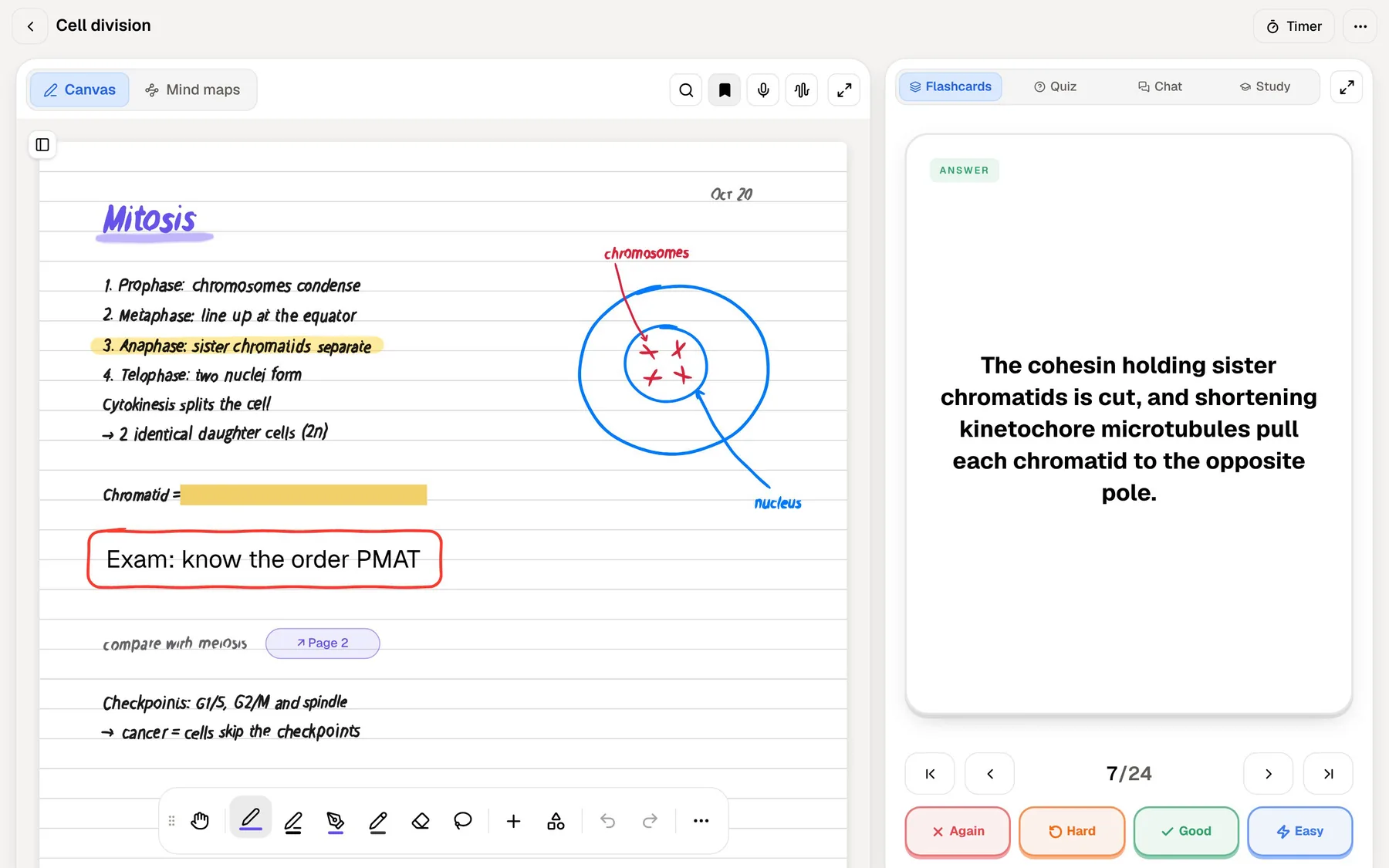
PocketNote can also turn the questions around. In an oral exam, Prof. Poki asks you about the reading, out loud or in text, and follows up until you can explain the idea in your own words. That is a demanding test, and it shows quickly whether listening translated into understanding.
On paid plans, live voice lets you talk to Poki and hear the answer, so the whole loop of listening, asking and being asked can happen away from a screen.
Textbook PDFs, headers and margins
Course PDFs are rarely clean. Running headers, page numbers, footnotes and figure captions sit in the middle of the text, and a reader that narrates every line will read them out and break the flow. ElevenReader's Ultra plan includes smart file imports that skip headers, footers and filler text, a small feature that makes a real difference over a long chapter.
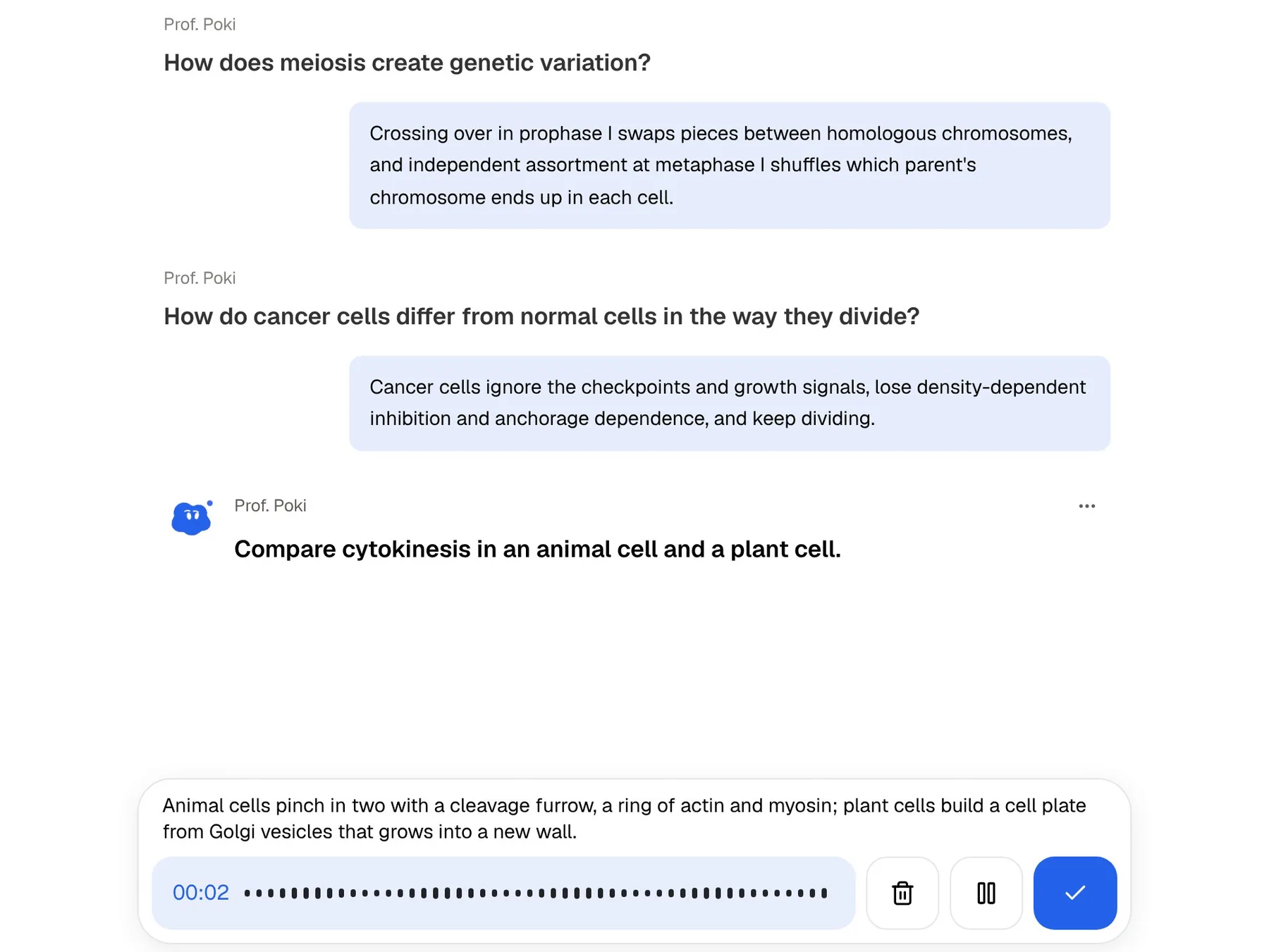
PocketNote treats the same PDF as something to work on rather than listen to. You can open it in the source viewer, highlight, write and draw on the page, and ask Poki about a passage; Poki can look at the page as you see it, including your highlights and handwriting. The notes, flashcards and mind maps then come from that material.
If you use both, the order is simple: listen to the clean narration in ElevenReader, then annotate and study the same file in PocketNote.
When ElevenReader is the better pick
Pick ElevenReader if you need to get through long readings by ear and want to do it for free. Ten hours of text-to-audio a month, the full set of voices and speeds up to 4x on the free plan is a lot of listening at no cost.
Pick ElevenReader if your reading includes e-books. EPUB is among its supported formats, and it is not among PocketNote's. It is also the better fit if you want audiobooks for leisure reading in the same app, an Android app, offline listening on Ultra, or narration that reads every word in order, which matters for set texts and anything you will quote.
And pick ElevenReader if text-to-speech is an accessibility need rather than a convenience. A faithful read-aloud with good voices does a job that an audio summary cannot.
It is also pleasant for reading that has nothing to do with exams. A sleep timer, bookmarks and a free audiobook catalogue make it an app you might open most days, not only in revision season, and a reading habit is worth having.
One reading list, two apps
A practical routine uses both. Load the week's PDFs into ElevenReader and listen on the commute, offline if you are on Ultra. When you sit down to study, import the same PDFs into PocketNote, or bring them from Google Drive, OneDrive or Dropbox, and generate flashcards, a quiz and a short audio review.
Add the lecture recording and your notes to the same folder, and Poki's answers and the study tools draw on all of it. The study plan then decides which cards and topics to review each day until the exam.
The notebook view is where that comes together: the list of sources on the left, a chat with Poki in the middle and the Study panel on the right, with the quiz, flashcards, mind map and podcast for that material one tap away.
If you only install one app tonight, decide which job is harder for you. If it is getting through the reading, start with ElevenReader. If it is remembering what you read, start with PocketNote.
The verdict
Which one should you pick?
Pick PocketNote if…
- Pick PocketNote if you have read the material and now need to remember it: flashcards with spaced repetition, explained quizzes and an oral exam.
- You want a podcast-style audio review that sits next to your flashcards and counts toward a study plan.
- You want to ask questions about your reading and get answers with citations to the source.
- You also record lectures or watch YouTube lessons and want them in the same place as the reading.
Pick ElevenReader if…
- Pick ElevenReader if you want your PDFs, EPUBs and articles read aloud in natural voices, with 10 free hours a month.
- You need every word read in order, for accessibility, set texts or quotations.
- You want audiobooks, an Android app or offline listening in the same app.
Try it yourself
See it with your own notes
PocketNote is an AI study app for iPhone, iPad and the browser. Upload PDFs and Word files, record a lecture, or paste a YouTube or web link, and Poki answers from that material with citations. From the same sources it builds flashcards with spaced repetition, quizzes with explanations, oral exams, mind maps and podcast-style audio reviews with captions.
Like ElevenReader, it says your content is not used to train public AI models, and it is free to start. It works well as the second step after a reader: listen first, then study.
Frequently asked questions
Sources
Keep reading