
SGPA & CGPA Calculator
Work out your SGPA from each subject's credits and grade, and your CGPA across semesters, on the 10-point scale used by Indian universities. Pick the UGC, VTU, KTU or JNTUH grade table or type your own, and see the SGPA you need in the remaining semesters to reach a target CGPA.
- No account needed
- Free, no limits
- Nothing is uploaded
How it works
- 01
Choose your grade table
Start with the UGC table (O 10, A+ 9, A 8 …) or your university's. If your grade card uses other points, edit a copy of the table.
- 02
Add your subjects
For each semester, enter every subject's credits and grade from your grade card. For past semesters, choose “SGPA only” and type the SGPA and total credits.
- 03
Set a target
On “Target CGPA”, enter the CGPA you want, the semesters left and their credits, and see the average SGPA you need.
How SGPA and CGPA are calculated
Credits times grade points, divided by credits
Under the UGC's Choice Based Credit System, every subject has credits and every letter grade has a grade point on a 10-point scale. Multiply each subject's credits by its grade point to get its credit points. SGPA = Σ(credits × grade point) ÷ Σ credits for the semester. In the UGC's own example, six subjects worth 20 credits earn 138 credit points, so the SGPA is 138 ÷ 20 = 6.90.
CGPA is the same calculation across semesters: each semester's SGPA weighted by its credits. In the UGC example, (20 × 6.9 + 20 × 6.7 + 26 × 9.15 + 26 × 7.38 + 24 × 7.75 + 24 × 8.0) ÷ 140 = 7.71. Both are rounded to two decimals. A plain average of SGPAs is only right when every semester has the same credits.
| Letter grade | Grade point |
|---|---|
| O (Outstanding) | 10 |
| A+ (Excellent) | 9 |
| A (Very Good) | 8 |
| B+ (Good) | 7 |
| B (Above Average) | 6 |
| C (Average) | 5 |
| P (Pass) | 4 |
| F (Fail) and Ab (Absent) | 0 |
Grade tables differ. UGC lets universities set their own mark ranges and pass grade: JNTUH R22 has no P grade, and KTU's 2019 scheme uses S 10, A+ 9, A 8.5, B+ 8 and so on, so the same letter is worth different points. Use the table printed on your grade card. A failed subject normally counts its credits with 0 points until you clear it, which is why one F pulls an SGPA down so far; audit and non-credit subjects are left out.
The target mode answers “what SGPA do I need?”: (target × total credits − current CGPA × credits done) ÷ remaining credits, rounded up. It assumes the remaining credits you enter and no new backlogs. It cannot model rules such as best-credits schemes, grace marks or how your university treats supplementary results, so read your regulation for those.
FAQ
Questions, answered
More free tools
Planning & grades
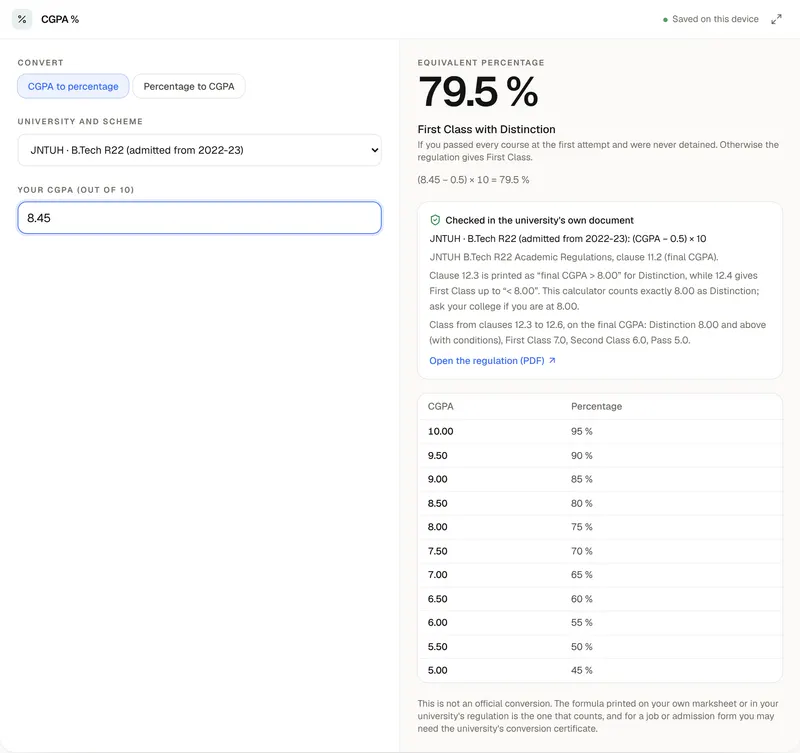
CGPA to Percentage Converter
Your university's formula, with the regulation it comes from.
Planning & grades
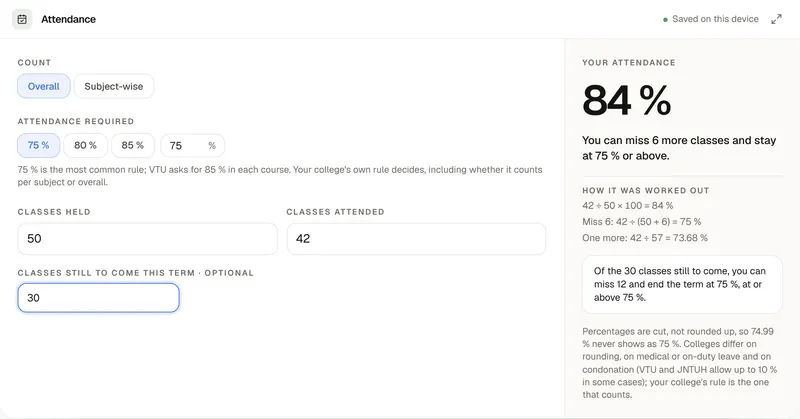
Attendance Calculator
Classes you can miss, or classes you must attend.
Planning & grades
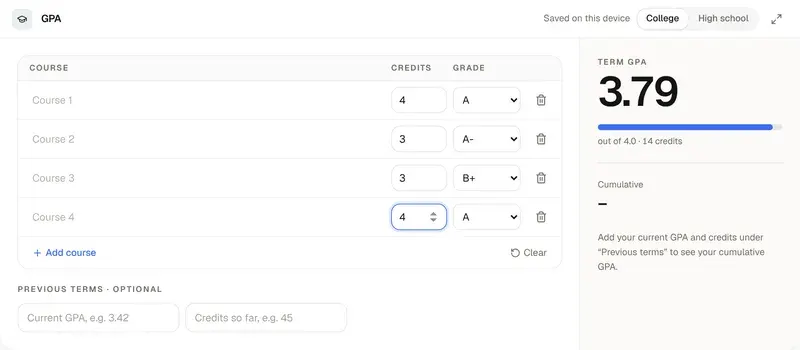
GPA Calculator
College or high school GPA, weighted or unweighted.
Planning & grades
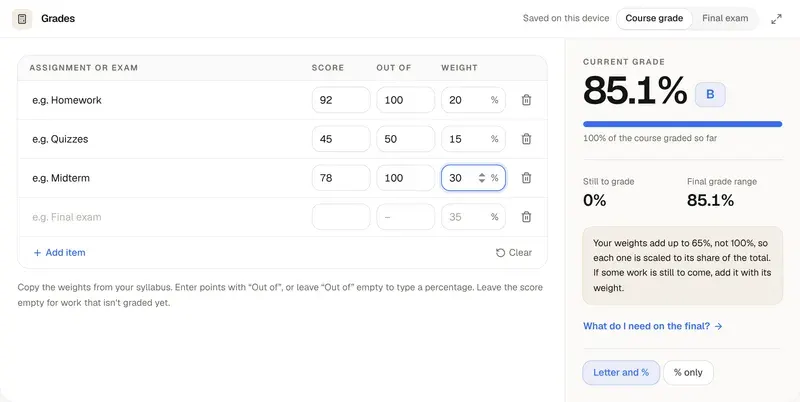
Grade Calculator
Your weighted grade, and what you need on the final.
Planning & grades
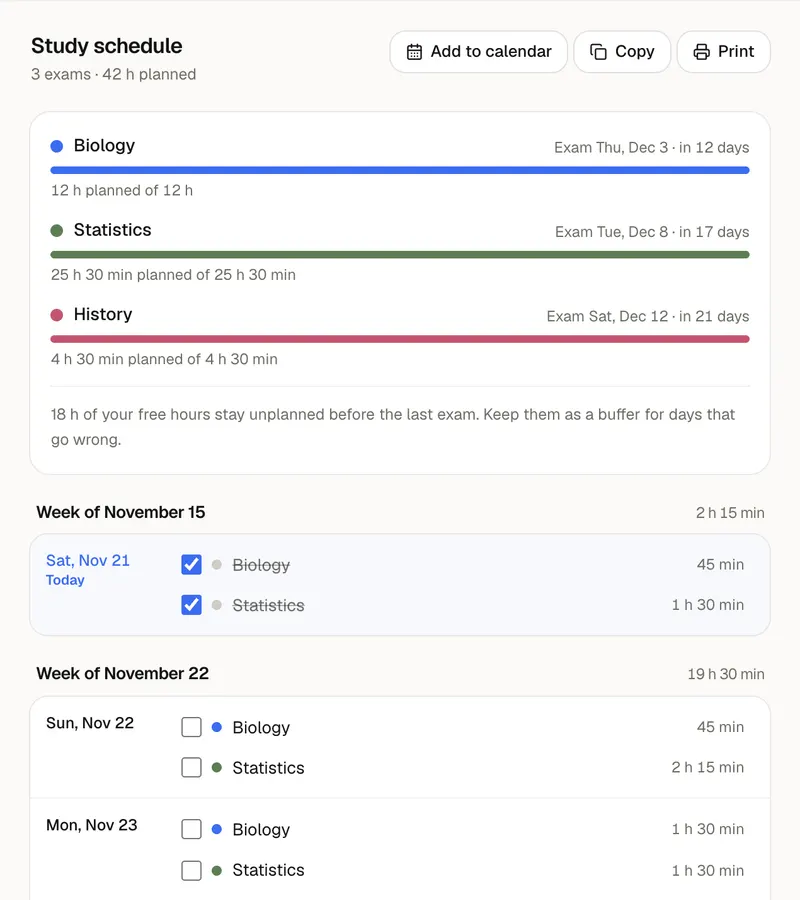
Study Schedule Maker
Your exams and free hours in, a day-by-day study plan out.
Keep reading
Go deeper into the science
Raise your SGPA with steady revision
PocketNote turns your notes and PDFs into flashcards and quizzes and spaces your revision until the semester exam.