
Brainly is built around a community where students answer each other's homework questions. You post a question in math, science, history or English, other students and Brainly's experts answer, moderators check the answers, and many are marked Expert-Verified. Today the app adds AI on top: an AI Tutor for step-by-step help, Scan to Solve for a photo of a math problem, textbook solutions, test prep, and live human experts on its Tutor plan.
PocketNote is a study app rather than a question-and-answer service. You bring your class material (your teacher's handouts, the slides, a YouTube lesson, your own notes on paper or on an iPad) and it turns that into flashcards with spaced repetition, quizzes that explain every answer, and a study plan for the test date.
Brainly is good at answering the question in front of you. PocketNote is good at helping you know the topic before the test. This post compares the two fairly, using Brainly's App Store and Google Play listings as checked in November 2026, and shows when each one is the better choice.
At a glance
PocketNote vs Brainly
| Feature | PocketNote | Brainly |
|---|---|---|
| Where answers come from | Your own material, with citations | Community, experts and AI |
| Ask about any school subject | Strongest on material you add | Yes |
| Scan a math problem | Not a photo solver | Scan to Solve |
| Human help | AI only (Poki) | Live Expert on the Tutor plan |
| Textbook solutions | No solutions library | Expert-written, search by title or ISBN |
| Flashcards with spaced repetition | Yes, rate Again/Hard/Good/Easy | Not advertised |
| Quizzes and test prep | From your material, every option explained | Practice from weekly quizzes to finals |
| Handwritten notes | Apple Pencil, lasso to text | Not advertised |
| Test-date study plan | Yes, with reminders and mastery scores | Not advertised |
| Platforms | Web, iPhone, iPad | Web, iOS, Android |
| Price model | Free to start; Basic and Plus plans | Free with ads; Brainly Plus and Tutor |
Checked against PocketNote's website and Brainly's App Store and Google Play listings, November 2026. Plans and features change; confirm current details there.
How Brainly works
Brainly's community Q&A is its foundation. You can ask any question, search questions others have already asked, and answer questions yourself. Answering earns points and badges, and leaderboards turn helping into a light competition. Brainly says its moderators review answers so they are correct and easy to understand, and that its experts are available around the clock.
The AI layer sits alongside the community. Brainly's AI Tutor gives step-by-step explanations for questions you type or scan, and Scan to Solve handles photos of math equations and word problems, from algebra through calculus. A textbook-solutions library lets you search by a book's grade, title, author or ISBN. Test prep offers personalized practice from weekly quizzes to finals.
Brainly covers math, science, history, English and other subjects, and says its math help reaches any school level, including AP and college courses. It is free to use, with ads. Brainly Plus and Brainly Tutor remove the ads, and Brainly Tutor adds Live Expert help from human tutors. Parents can also pair their account with their child's, which Brainly describes as part of its commitment to safety. Its app listings now call it an AI learning companion and a personal tutor, which shows how much the AI side has grown next to the community.
When a quick answer is the right tool
Some questions really are one-off. You missed what the teacher said about the difference between weather and climate, or you want to check whether you set up an equation correctly. A crowd that has seen the same question many times, plus an AI tutor, is a fast way to get past that.
Brainly also covers ground PocketNote does not try to. PocketNote's assistant is strongest on the material you give it and is not a general homework helper, and it does not solve math from a photo. If you have no notes on a topic and just need an explanation of something general, Brainly or a teacher is a better first stop.
There is a learning upside to the community, too. Answering other students' questions makes you explain a topic in your own words, and explaining something to someone else is one of the better tests of whether you understand it. If you are strong in a subject, answering on Brainly is useful practice.
The limit is what happens next. An answer to tonight's homework question does not schedule itself for review before the unit test, and it is not built from your teacher's version of the topic. That is the gap a study app fills.
Learning the topic you will be tested on
Tests are written from what your teacher taught, so the best study material is your class material. In PocketNote you import the handouts and slides (PDF, Word or text files), paste the YouTube lesson your teacher assigned (its transcript comes with it), or add a web article. Everything goes into color-coded folders, one per subject.
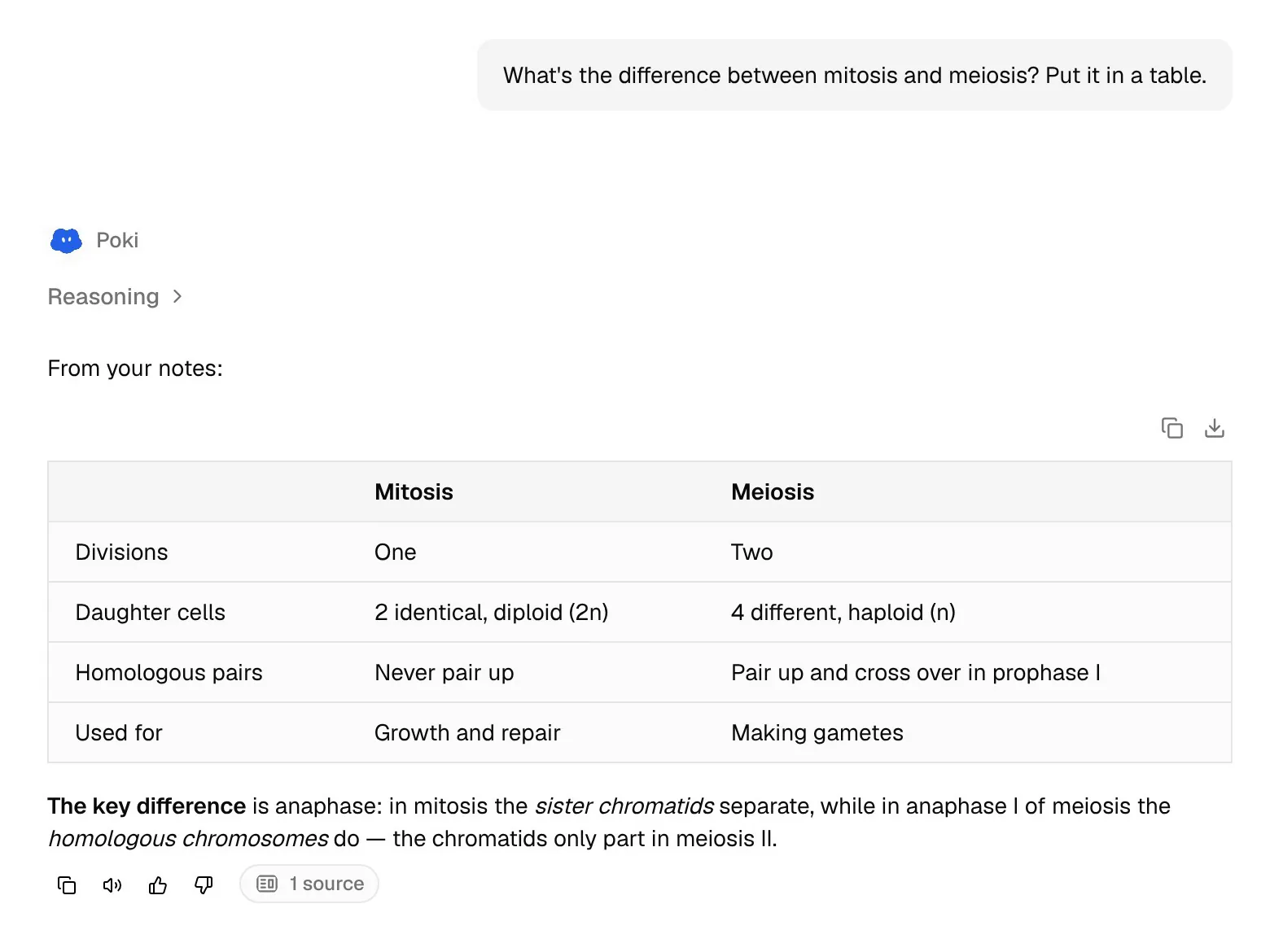
From there you ask Poki questions, and it answers from those files with citations, so you can open the exact part of the handout it used. When you understand the topic, you generate flashcards, a quiz, a mind map or a short audio review from the same material.
Then you tell PocketNote when the test is. The study plan spreads the topics over the days you have left, reminds you each day, and tracks memory, applied and mastery scores, so you can see which parts of the unit are solid and which need another pass before test day.
Watching a lesson works the same way. A video lesson sits next to its timed transcript, and flashcards can be made from it, so the five-minute video your teacher assigned becomes something you can practise with instead of something you watched once.

From class notes to flashcards
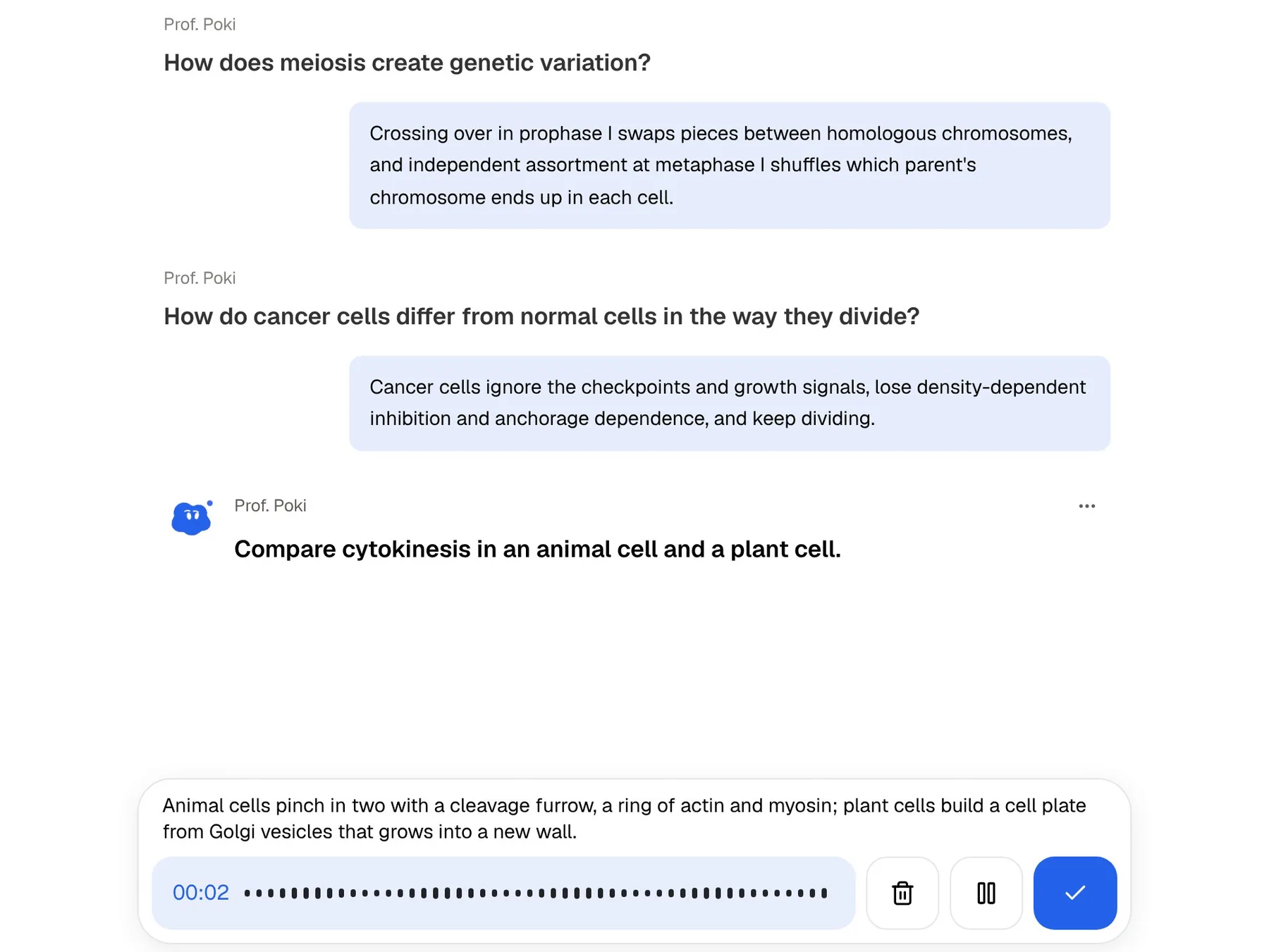
Many students take notes by hand, and those notes are often better than any summary because they record what the teacher stressed. On an iPad with Apple Pencil, PocketNote gives you pens, highlighters, page templates such as lined, grid and Cornell, and a lasso that can turn handwriting into text or send a selection to Poki with a question.
Your handwritten notes can then become study material like any other source. Flashcards come back on a spaced-repetition schedule: you rate each card Again, Hard, Good or Easy, and the ones you miss return sooner. Quizzes explain why each option is right or wrong. The "tape" tool lets you cover answers on your own notes so you can test yourself on the page.
If your teacher allows recording, Note Replay records audio while you write. Playing it back shows the strokes you were writing at each moment, so a note that just says "remember this!" comes with the explanation that went with it.
This is where the two apps differ most. Brainly helps you with questions as they come up. PocketNote helps you build a set of practice from your own notes and review it until the test.
Answers you can check
Every answer service has to earn trust. Brainly uses moderators, an Expert-Verified label and AI explanations, and many answers are excellent. Its textbook solutions are written by experts, which helps when an assignment comes straight from a textbook's problem set. Community answers can still vary in depth, and an answer written for someone else's class may use a method your teacher does not.
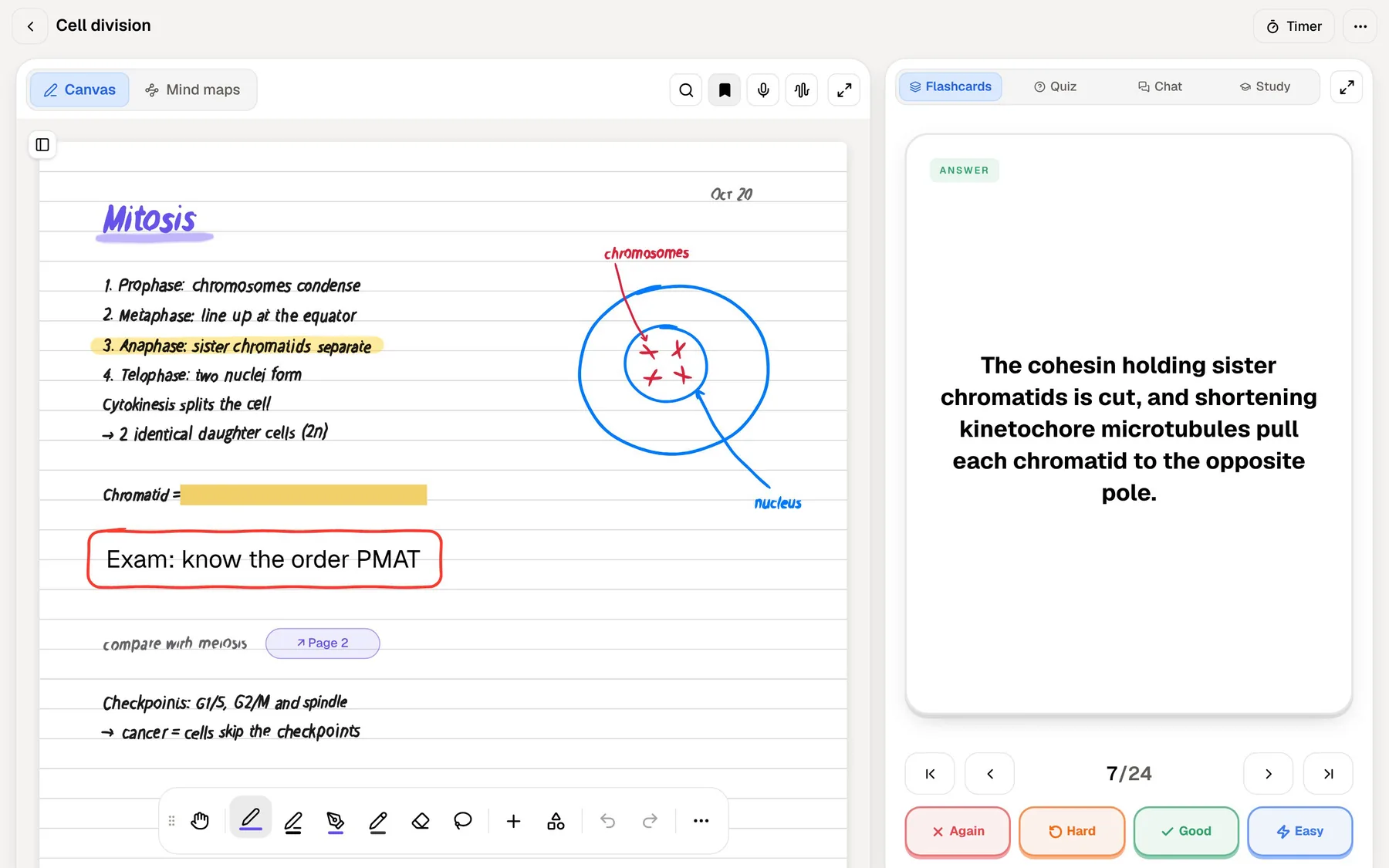
PocketNote takes a narrower approach. Poki answers from the files you added and cites them, and it shows its steps as it works, such as searching your notes or reading a specific item. If an answer looks wrong, you can open the source and check. Say your history teacher spent a whole lesson on three causes of a war and the textbook lists five: an answer drawn from your own notes reflects the three your teacher stressed, which are likely the ones the test will ask about. That does not make Poki infallible, but it means you can always see where an answer came from and whether it matches what your teacher said.
Studying out loud
Brainly's Tutor plan adds live help from human experts, which is valuable when you want a person to walk you through something. PocketNote's spoken tools are AI, and aimed at practice rather than help.
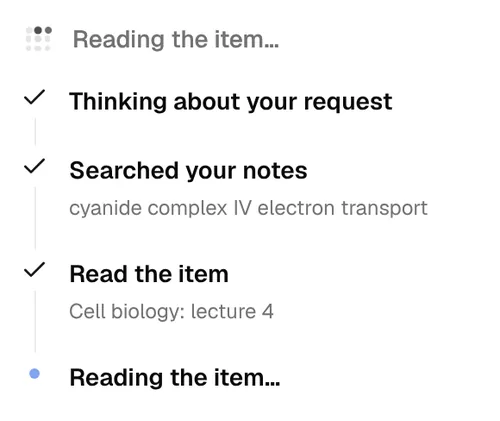
In the oral exam, Prof. Poki asks you questions about your material, out loud or in text, and follows up until your explanation is complete. On paid plans, live voice lets you ask Poki to quiz you on a topic and answer by speaking, which is handy for revising on the bus or while walking.
For listening without talking, PocketNote can also turn a unit into an audio review, a podcast-style episode about your material with captions that follow the voices, so you can review a topic on the way to school and glance at a word you did not catch.
Plans and cost
Brainly is free to use, with ads. Its paid plans are Brainly Plus and Brainly Tutor, which both remove ads, and Brainly Tutor adds Live Expert help from human tutors. Both are sold as monthly or yearly subscriptions in the app, and prices vary by country, so check the app for yours.
PocketNote is free to start. Its paid plans are Basic (live voice, premium AI models and connectors) and Plus (unlimited notebooks and apps, the longest podcasts and all models). See pocketnote.app for current prices.
On homework rules, the advice is the same for both. Using an answer to understand a problem is studying; copying it into graded work usually is not allowed. Check what your teacher or school permits, including for AI tools.
Where Brainly is the better choice
Brainly is the better pick in several common situations.
- You need help with a question on a topic you have no notes for. A large community and an AI tutor cover almost any school subject.
- You want to scan a math problem. Scan to Solve handles equations and word problems with step-by-step explanations; PocketNote is not a photo solver.
- You want a human tutor on demand. Live Expert is available on the Tutor plan.
- You like helping others. Answering questions, earning points and climbing leaderboards is part of how Brainly works.
- You use Android, or a parent wants a linked account. Brainly has an Android app and parent account pairing.
The verdict
Which one should you pick?
Pick PocketNote if…
- You want to study your teacher's material, not answers written for someone else's class.
- You take handwritten notes and want them turned into flashcards and quizzes.
- You want spaced-repetition review and a plan for the test date.
- You want answers that cite your own handouts and notes.
Pick Brainly if…
- You need quick help with a homework question, on any school subject.
- You want to scan a math problem or reach a live human tutor.
- You enjoy a community of students answering each other, or you use Android.
Try it yourself
See it with your own notes
PocketNote is an AI study app for the web, iPhone and iPad. Import your handouts, slides, YouTube lessons and notes, or write notes by hand, and it builds flashcards with spaced repetition, quizzes that explain every answer, oral exams, audio reviews and a study plan for your test date. Poki answers from your own material, with citations.
Keep Brainly for the quick questions, and try PocketNote for the next unit test: import your notes, make a deck, and let the plan tell you what to review each day. It is free to start.
Frequently asked questions
Sources
Keep reading