
Brainscape is a flashcard app built around one habit: after each card you rate how confident you were, from 1 to 5, and the app uses that rating to decide how soon you see the card again. Its pull is a catalogue of expert-certified, pre-made decks for entrance exams, professional certifications, languages, medicine and nursing, law and science, alongside whatever you make yourself.
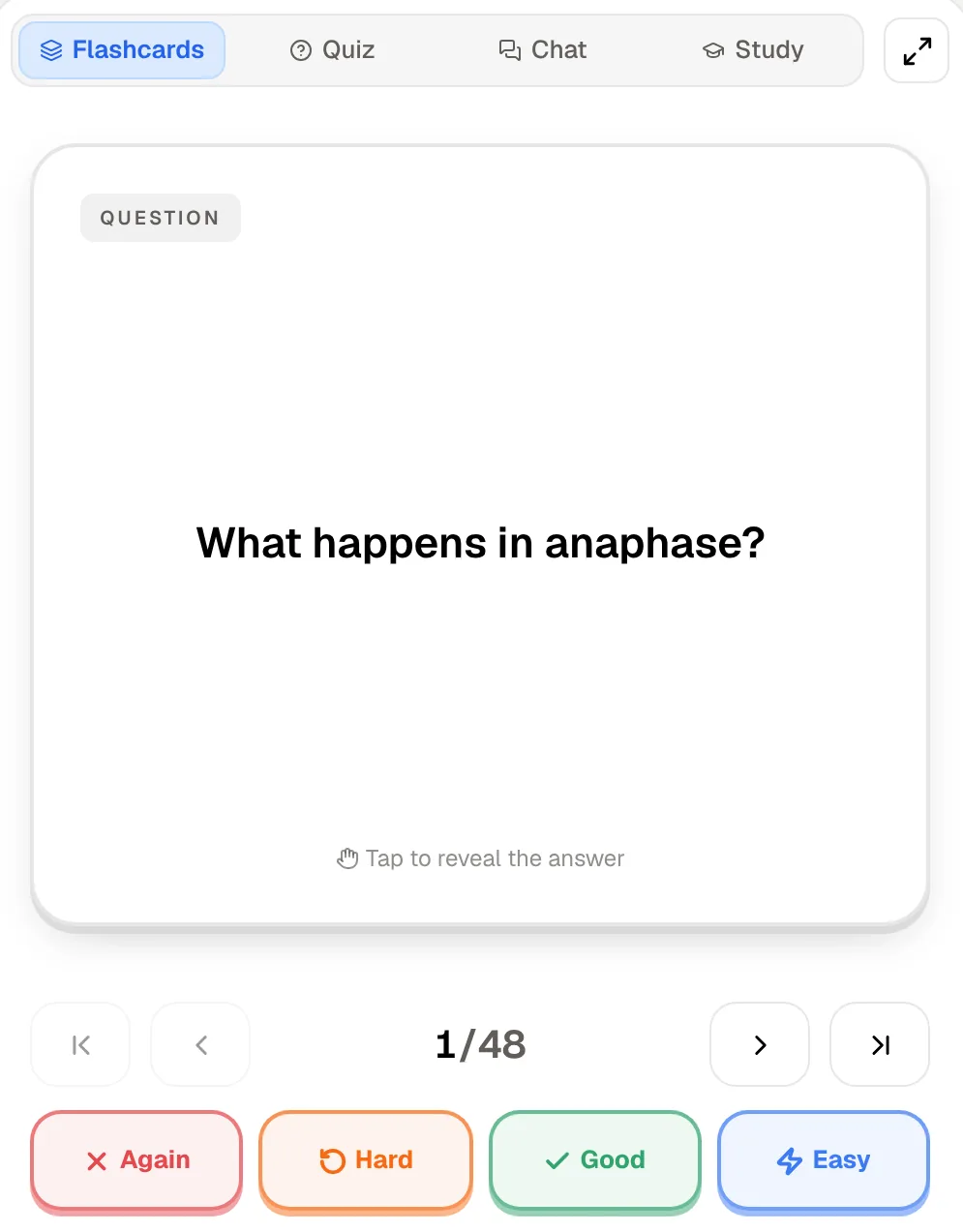
PocketNote doesn't host pre-made decks. It generates flashcards from the material your course gives you, then adds quizzes with explanations, an oral exam and a study plan. You rate cards Again, Hard, Good or Easy, and they come back when you're about to forget them.
The choice usually comes down to what you're studying for. A standardised exam with a fixed content outline suits a certified deck. A university course with its own lectures and readings suits generated material. This comparison walks through both cases, with Brainscape's current pricing and the situations where it is the stronger choice.
At a glance
PocketNote vs Brainscape
| Feature | PocketNote | Brainscape |
|---|---|---|
| Review ratings | Again, Hard, Good, Easy | Confidence, 1 to 5 |
| Pre-made decks | No public library | Certified decks plus user decks |
| AI card creation | From files, audio, links, handwriting | From PDF, PPT, Word, Excel, YouTube |
| Anki deck import | Not among its import formats | Yes |
| Record a lecture | Yes: transcript, summary, notes | Not advertised |
| Quizzes with explanations | Yes, for every option | Not advertised |
| Oral exam | Prof. Poki, voice or text | Not advertised |
| Planning and reminders | Exam-date plan, reminders, mastery | Study reminders, progress tracking |
| Ask questions about your notes | Poki, with citations | Not advertised |
| For educators | Share a link to a note | Progress tracking, shared editing |
| Platforms | Web, iPhone, iPad | Web, iOS, Android |
| Price | Free to start; Basic and Plus plans | Free Basic; Pro $7.99/mo (yearly) |
Checked against each product's own website, November 2026. Plans and features change; confirm current details there.
How Brainscape's 1-to-5 scale works, and how to rate honestly
Brainscape calls its method Confidence-Based Repetition. You see the question, think of the answer, reveal it, and rate yourself from 1 (not at all) to 5 (totally confident). Cards you rate 1 or 2 come back much sooner; cards rated 4 or 5 appear less often. Brainscape describes it as a more granular, adaptive take on the Leitner box system.
PocketNote's review works on the same principle with four steps instead of five: Again, Hard, Good, Easy. In both apps the rating is your own judgement, so honesty is what makes the schedule work. The practical difference is less the scale than what is on the cards and what happens around them.
Both apps hand the scheduling decision to your rating, so the habit that matters most is the same in each: rate what happened, not what you hoped. If you had to guess, or you only recognised the answer once you saw the back, that is a low rating in Brainscape and Again or Hard in PocketNote.
Over-rating is the common mistake. A card marked 5 or Easy goes away for longer, and if you didn't really know it, the next time you meet it may be in the exam. Under-rating costs much less: you simply see the card again sooner.
If you switch between the apps, treat Brainscape's low end (1 is 'not at all') as the same signal as Again, and its high end (5 is 'totally confident') as the territory of Good and Easy. The intervals that follow won't match, because each app runs its own scheduling.
Brainscape includes spaced repetition, progress tracking and study reminders even on its free Basic plan, so you can judge the method without paying.
Certified decks: what Brainscape is really for
Brainscape's catalogue is organised by subject, with categories for entrance exams, professional certifications, foreign languages, medical and nursing, law and science. Featured decks include NCLEX-RN, NREMT paramedic, human anatomy and Spanish. The ones marked certified are described as expert-certified, pre-made flashcards.
The free Basic plan lets you study 2,500 pre-loaded flashcards plus unlimited cards you made or that others shared with you. Pro adds unlimited certified flashcards and unlimited AI card creation, along with images and sounds on cards, reversed cards, bookmarked cards, resetting study stats and private content.
For a licensing exam with a fixed content outline, a vetted deck saves a lot of time. PocketNote has no public or certified library, so it can't help in the same way; it works only from material you bring.
Pre-made decks share a limit that Anki's manual points out about shared decks, which it says should supplement your own course material rather than replace it: they can't follow what your own lecturers chose to stress.
Making decks from your own material
Brainscape can generate cards with AI too. Its homepage lists PowerPoint, PDF, Word, Excel, Anki decks and YouTube videos as inputs, and you can edit the results and organise them into classes and decks. The free plan allows hundreds of AI-made cards; Pro removes the limit. Brainscape also mentions importing vocabulary lists and question banks, and turning photos or video into flashcards.
PocketNote's inputs overlap and go further into lectures and handwriting. You can import PDF, Word, Excel, CSV, TXT and Markdown files, MP3, WAV, M4A and OGG audio, YouTube links and web articles, or pull files from Google Drive, OneDrive and Dropbox. You can record a lecture in the app and get a transcript, a summary and notes, write notes by hand on iPad, or search arXiv and SSRN for a paper and save it. Flashcards, quizzes and the rest are generated from whatever you add.
If you have an existing Anki collection, Brainscape is the one of the two that imports it. PocketNote's import formats don't include Anki decks, and PowerPoint files need exporting to PDF first.
What a study session looks like in each
A Brainscape session is focused: pick a deck, go through the cards, rate each one, and watch your progress build. Its strength is that simplicity. There is one thing to do, and it works well on a phone between classes. Cards sync to every device you log in on, so you can move between the web and your phone.
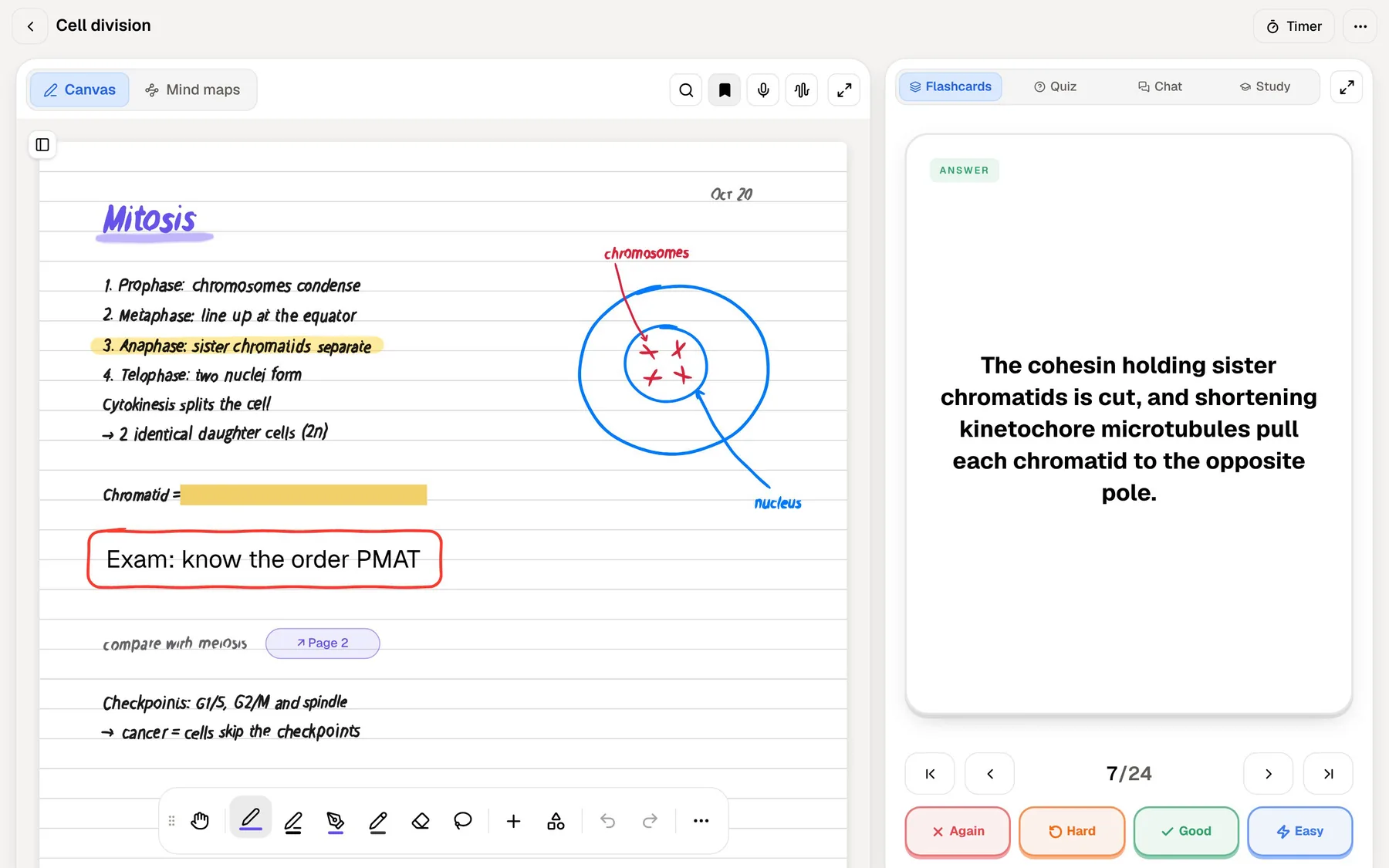
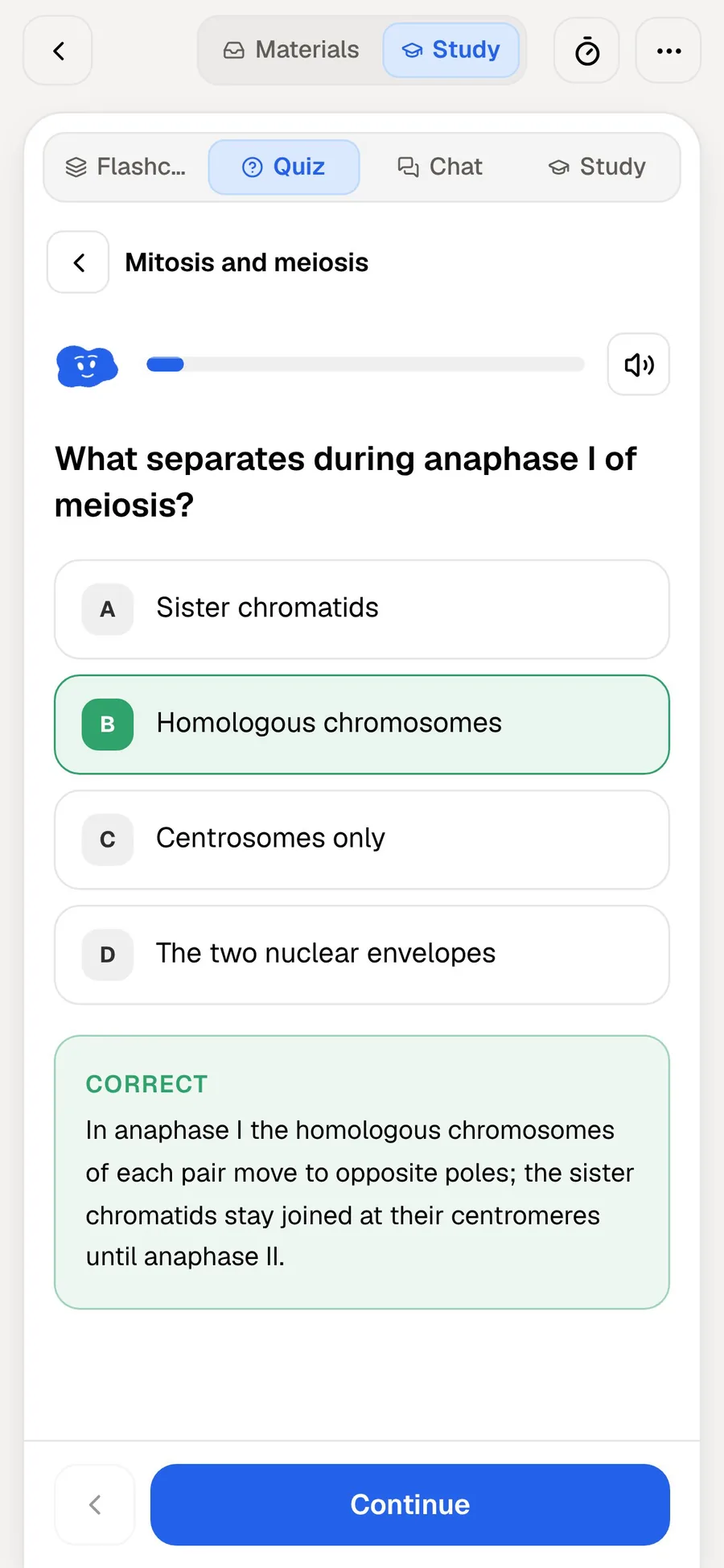
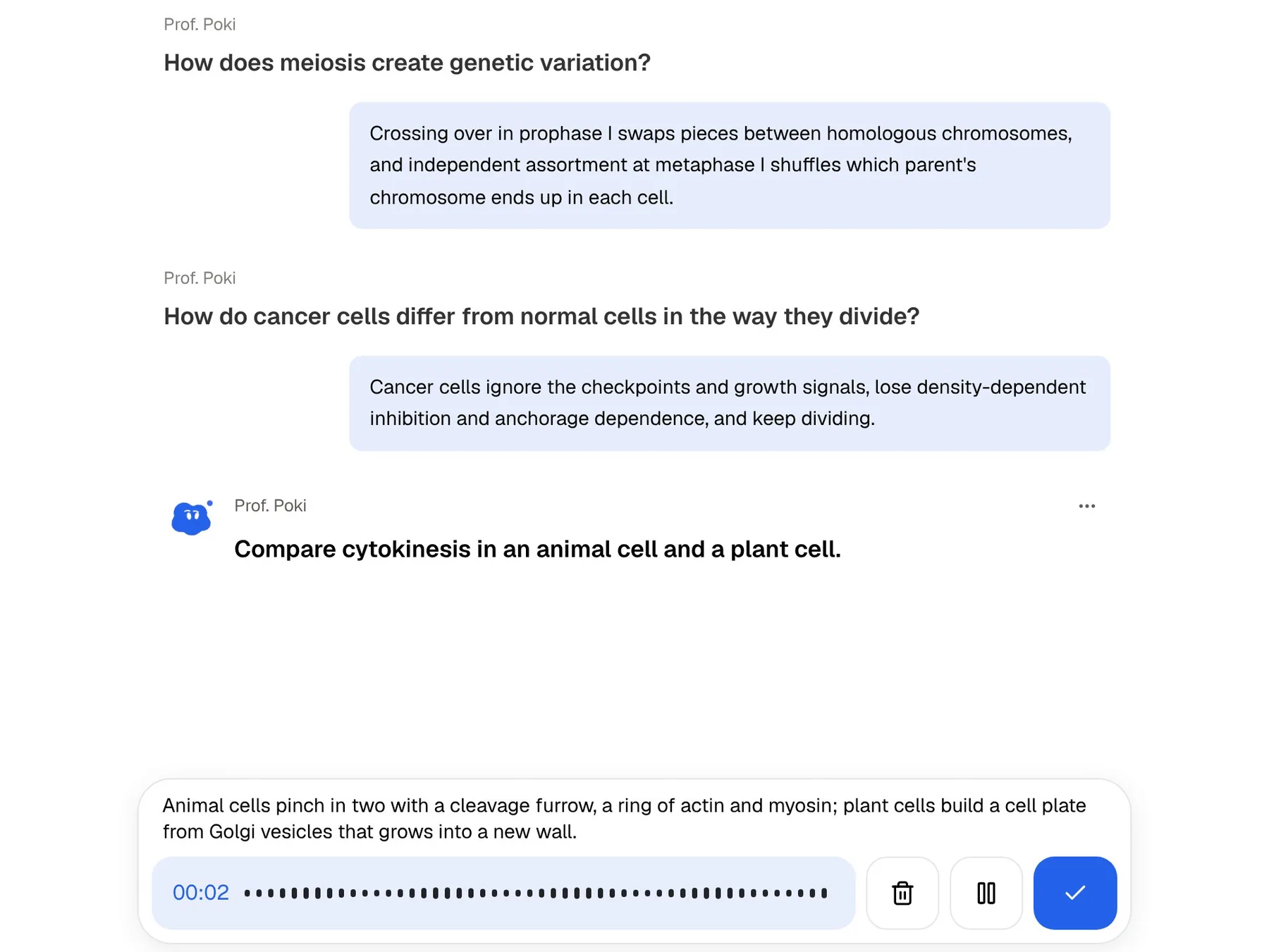
A PocketNote session can stay that simple, or branch out. After the flashcards you can take a quiz where every answer comes with the reason, including why each wrong option is wrong. For subjects where you have to explain rather than recall, the oral exam has Prof. Poki ask questions out loud or in text and follow up until your explanation holds. And if a card confuses you, you can ask Poki, which answers from your own material with citations to the source.
Neither approach is better in the abstract. Recall-heavy exams reward a lot of card reviews; essay and case-based exams reward practice at explaining.
A pharmacology module, worked through in PocketNote
To make the course side concrete, take a nursing student's pharmacology module: weekly lecture slides, a drug-class handout and a recorded case discussion.
The slides go in as a PDF, the handout as a Word file and the case discussion as an audio file, all in one colour-coded folder. PocketNote generates flashcards on drug classes and mechanisms from the slides and handout, and the recording becomes a transcript, a summary and notes.
During the week, flashcards come back as you rate them. On Friday a quiz checks the handout, and each answer explains why the other options are wrong, which is where similar-sounding drug names can trip you up. Before the module exam, the oral exam asks you to explain a mechanism in your own words, and Poki can answer a follow-up question with a citation to the handout.
None of that replaces a certified licensing-exam deck. It covers the module your own lecturers will examine.
Pricing at the time of writing
At the time of writing (November 2026), Brainscape's pricing page shows three plans. Basic is free forever. Pro is listed at $7.99 a month, shown under the page's yearly option, and the page says you can cancel at any time. Enterprise is priced per group for schools and companies, with savings of up to 70% off consumer Pro according to the page.
PocketNote is free to start. Its paid plans are Basic, which adds live voice, premium AI models and connectors, and Plus, which adds unlimited notebooks and apps, the longest podcasts and all models. See pocketnote.app for current prices.
Whether Brainscape Pro is worth it depends mostly on whether a certified deck covers your exam. If it does, unlimited access to that deck is the main thing you're paying for. If your study is mostly your own cards, the free plan already lets you study unlimited cards you made.
Both have free tiers you can genuinely study on, so try each with one real chapter before paying for either.
Where Brainscape is the better choice
Brainscape is the better pick in several common situations. Its catalogue is organised around the exams themselves, and no amount of AI generation from your own notes replaces a deck that experts have already certified.
- You're studying for a certification or licensing exam that a certified Brainscape deck already covers.
- You want one simple study mode and like rating your confidence on a five-point scale.
- You teach or train people: Brainscape lets educators and trainers give secure access to decks, track progress, and set editing permissions so several people can build decks together.
- You have an Anki collection you want to bring into a different app.
- You study on Android, where Brainscape has an app and PocketNote doesn't yet.
Using Brainscape and PocketNote side by side
The two fit together better than most pairs. A nursing student might use a certified Brainscape deck for the licensing exam's standard content, and PocketNote for their own programme's lectures, handouts and readings, which no pre-made deck can know about.
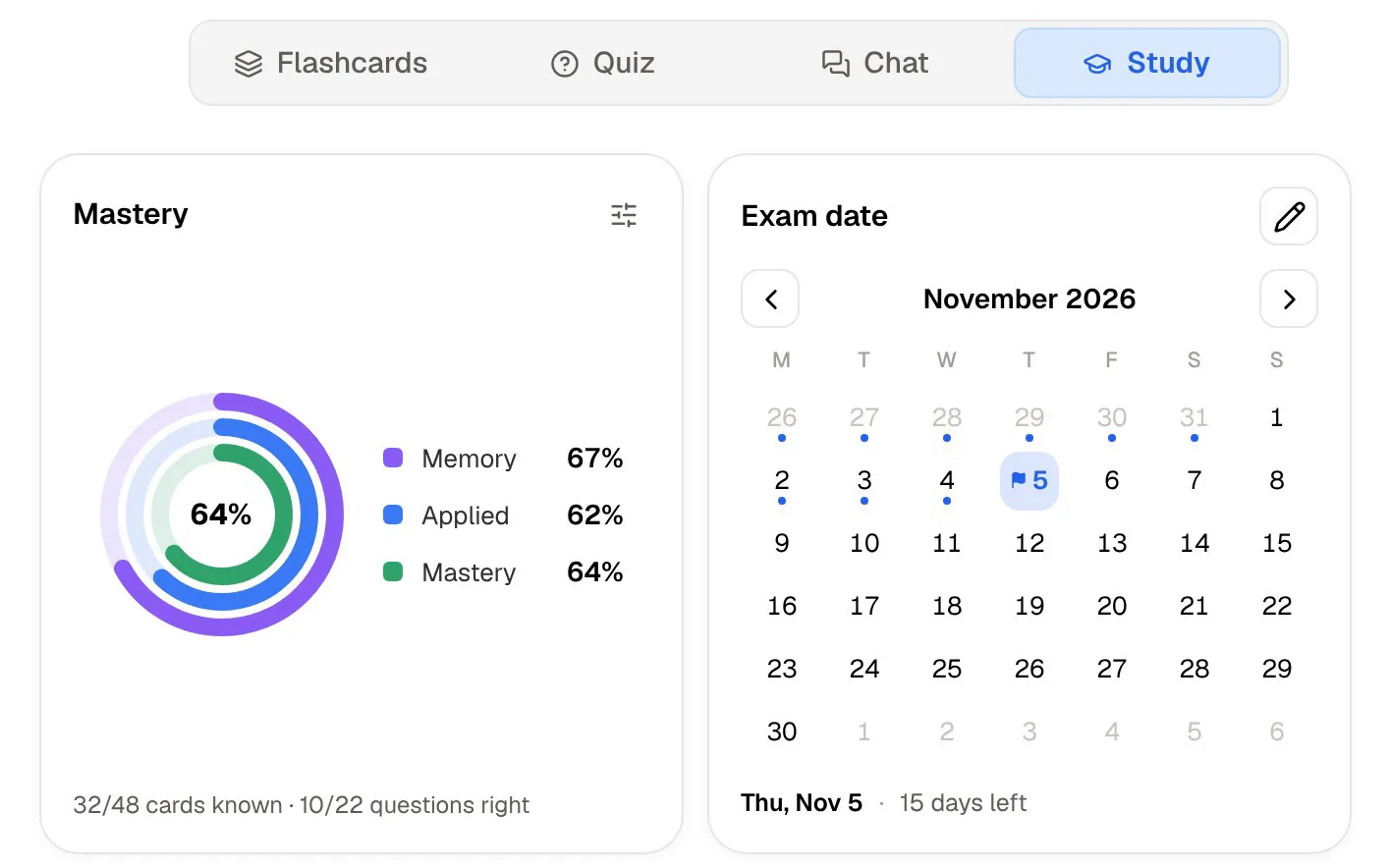
PocketNote's study plan can then carry the course side. Set the exam date and it plans what to cover each day, reminds you, and tracks memory, applied and mastery scores across flashcards, quizzes and the oral exam. The decks don't sync between the two apps, so keep each set of cards where you review it. In practice, that means the certified deck's daily reviews stay in Brainscape and PocketNote's plan handles the module work, so you aren't reviewing the same facts twice.
The verdict
Which one should you pick?
Pick PocketNote if…
- Your course has its own lectures, PDFs and readings that no pre-made deck covers.
- You want cards generated from recordings, files and handwritten notes instead of typed or bought.
- You want quizzes with explanations, an oral exam and an exam-date plan with the flashcards.
- You study on iPhone, iPad or the web and want to start free.
Pick Brainscape if…
- You're preparing for a standard exam with a certified deck ready to study.
- You like one focused mode and a five-point confidence scale.
- You teach or train a group and want progress tracking, or you study on Android.
Try it yourself
See it with your own notes
PocketNote is built for the material only your course has: the lecturer's slides, the assigned papers, the recording of the seminar, your own handwriting. It turns them into flashcards rated Again, Hard, Good or Easy, quizzes that explain every answer, an oral exam with Prof. Poki and a study plan to your exam date.
It is free to start on the web and on iPhone and iPad. If a certified Brainscape deck covers your licensing exam, keep using it, and add PocketNote for everything the deck doesn't know about.
Frequently asked questions
Sources
Keep reading