
Consensus is a search engine for scientific papers. You type a question in plain language, such as whether a supplement improves sleep, and it searches what it describes as more than 400 million scientific papers, then writes a short answer with citations to the studies behind it. For yes-or-no questions it adds the Consensus Meter, a bar showing how the top results lean: yes, no or possibly.
That makes it well suited to essays, debates and the "find three peer-reviewed sources" stage of an assignment, especially for questions in health, psychology and nutrition. PocketNote does a different job. It reads the material your course gives you, answers from it with citations, and turns it into flashcards, quizzes and an oral exam.
This page compares the two directly, explains how to read the Consensus Meter without over-trusting it, and says where Consensus is the better tool.
At a glance
PocketNote vs Consensus
| Feature | PocketNote | Consensus |
|---|---|---|
| Built for | Studying your course material | Searching peer-reviewed research |
| Answers come from | Your files, cited | Papers in its index, cited |
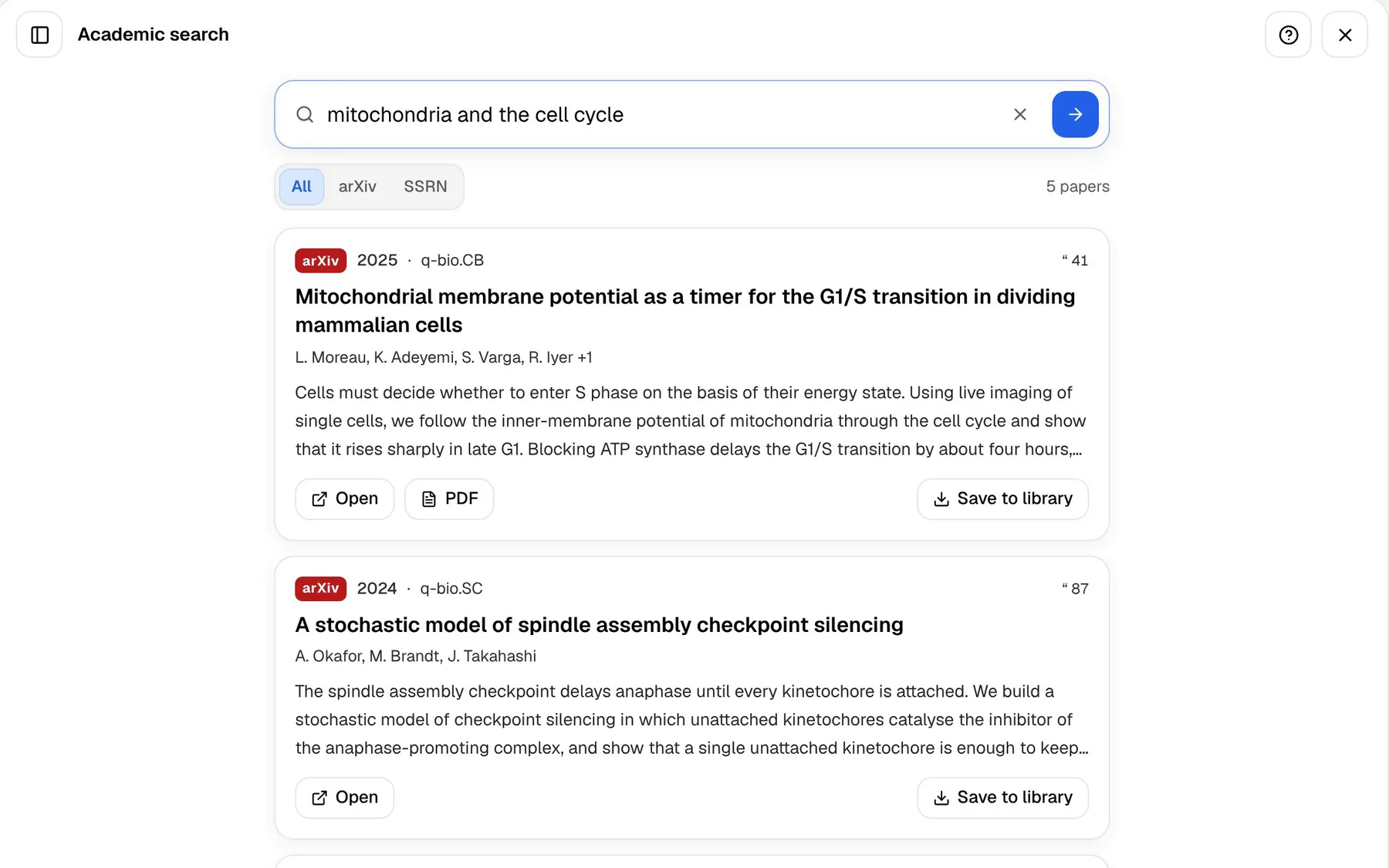
| Paper search | arXiv and SSRN | 400M+ papers, by its own count |
| Yes/no evidence summary | Not offered | Consensus Meter (beta) |
| Per-study summaries | Notes, summaries and mind maps | Study Snapshots: findings and methods |
| Chat with one paper | Yes; Poki can mark up the PDF | Ask Paper |
| Citation export | Not a citation manager | RIS, BibTeX and CSV |
| Flashcards with spaced repetition | Yes: Again / Hard / Good / Easy | Not advertised |
| Quizzes with explanations | Yes, for every option | Not advertised |
| Lectures and handwritten notes | Record lectures; handwrite on iPad | Not advertised |
| Cost | Free to start; Basic and Plus | Free to use; paid plans for more |
Checked against each product's own website, November 2026. Plans and features change; confirm current details there.
What Consensus does well
Consensus is built for one kind of question: what does the research say about this? It searches its index, finds relevant papers, and writes a synthesised answer with citations, in Pro Search and Deep Search modes. Each paper gets a Study Snapshot with its key findings and methodology, so you can judge a source before you open it.
Around that it has the tools of a research assistant. Ask Paper lets you chat with a single paper. A citation graph shows how papers relate to one another. Collections organise what you save, and citations export as RIS, BibTeX or CSV for a reference manager.
For a student writing an argumentative essay, that combination is efficient. You get a quick sense of where the evidence points and a list of real, citable studies, rather than an answer drawn from whatever ranks well on the open web.
The snapshots also keep the evidence checkable. Because each one puts a paper's methods next to its findings, you can see what kind of study produced a result before you cite it, which is the first thing a marker will ask about.
How to read the Consensus Meter
The Consensus Meter is the feature people remember, and Consensus is unusually open about its limits. Its own explainer says the meter applies only to yes/no questions, looks at the first 20 results, and uses language models to classify each relevant one as yes, no or possibly. Results whose direction is unclear are left out, and every classified result is listed below the meter with its tag, quoted from the paper rather than generated.
The same article sets out the guardrails, and they are worth reading before you quote a meter in an essay. Treat it as a pointer to papers worth reading, then open the studies and judge them yourself.
- Consensus estimates that the model misclassifies about 10% of results, more often with double negatives or convoluted wording.
- It can miss nuance in your question, for example counting a study in children as evidence about adults.
- It does not weigh research quality: a meta-analysis and a single case report count the same.
- It is a snapshot of accessible research rather than a comprehensive review, and the feature is labelled beta.
Where Consensus stops short for exams
Consensus helps you find and cite evidence. It doesn't advertise flashcards, quizzes or a review schedule, and it works from its own index rather than from your lecturer's slides. If your exam asks you to explain the stages of meiosis as they were taught in week four, a search across hundreds of millions of papers is the wrong instrument.
It also has little to say about the parts of a course that aren't papers: recorded lectures, slide decks, textbook chapters, a YouTube video your tutor set, the notes you wrote by hand. In most taught courses, those are where the exam questions come from.
And knowing that studies support a claim is not the same as being able to reproduce the argument under exam conditions. That takes practice: answering questions without looking, getting some wrong, and coming back to them.
One essay topic, two tools
Take a psychology module with an essay on whether sleep deprivation impairs memory and an exam on the lecture course. Consensus is the right tool for the essay's evidence: ask the question, read the meter and the snapshots, open the strongest studies and export their citations.
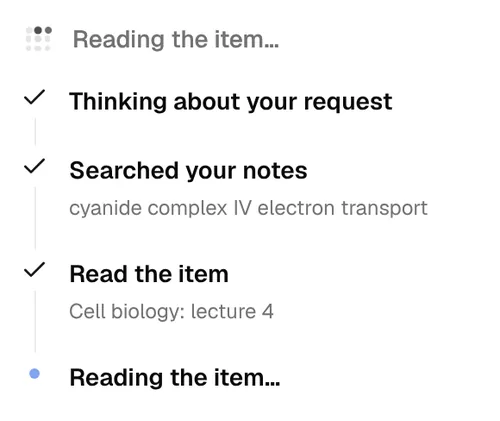
The exam is a different job, and it starts with the lecture. In PocketNote, ask Poki about the topic and it searches your notes and sources first, shows its steps as it goes (searched your notes, read the item "Cell biology: lecture 4" in our demo library) and answers with citations to the exact source. Because the answer points to its sources, you can open the one it came from and check it against what was taught.
Keeping the two jobs in separate tools has a side benefit. Your essay sources stay in your reference manager, and your study library stays focused on what the exam covers.
What a citation points to
Both products cite their sources, and it is easy to treat that as the same feature. It isn't quite. A Consensus citation points to a published study in its index. That is what you want in an essay's reference list, because the marker expects evidence from the literature.
A Poki citation points to a source in your own library: the week-four slides, the set textbook, the transcript of a recorded lecture, your own notes. That is what you want when revising, because exam questions and mark schemes follow the course as it was taught, including the lecturer's definitions, examples and diagrams.
The difference shows up in small ways. A study on memory might define working memory differently from the model your lecturer used. Both are legitimate, but only one will earn the marks on your paper. Knowing which source an answer came from lets you decide which version to learn.
Revising the lecture in PocketNote
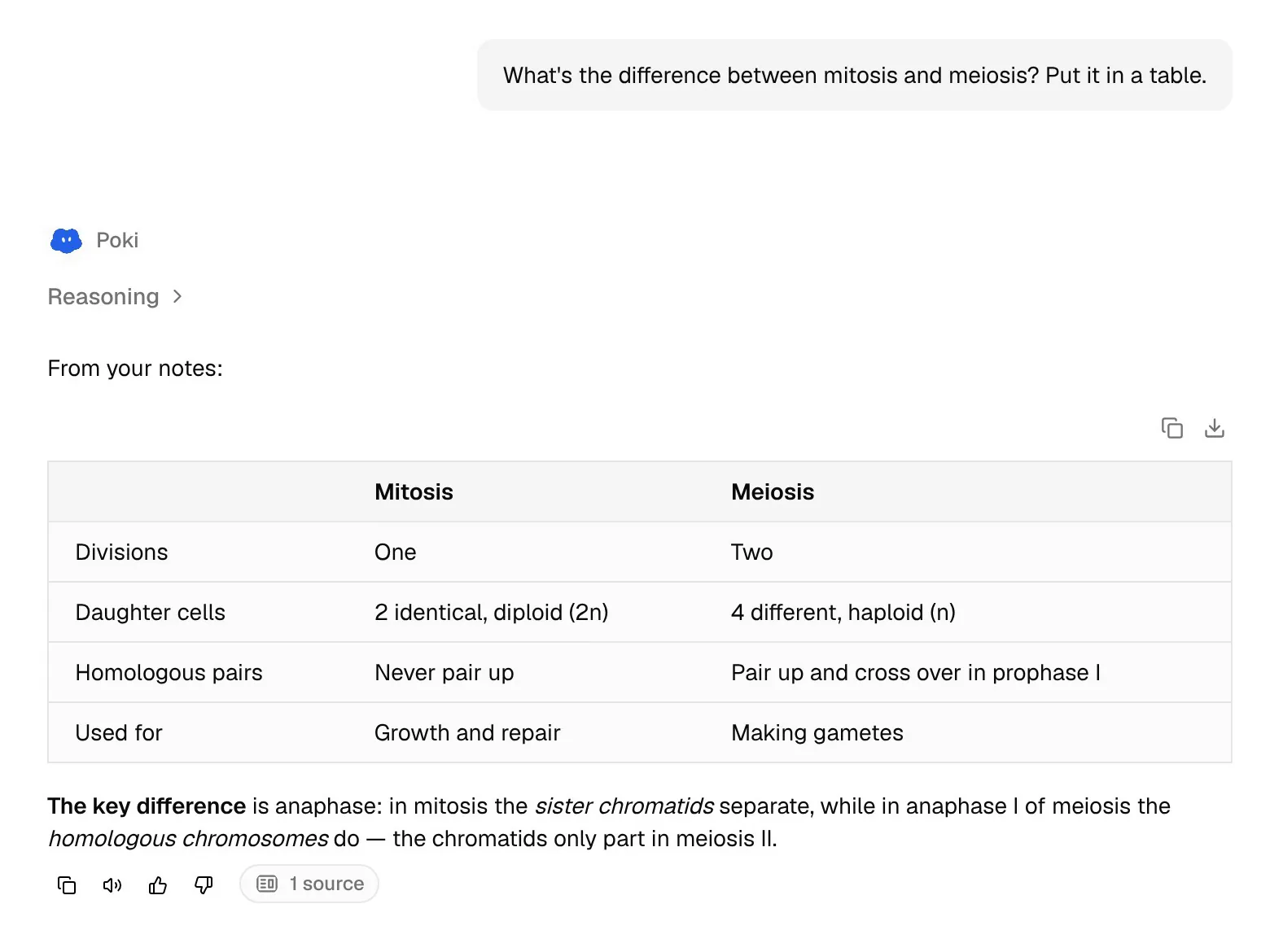
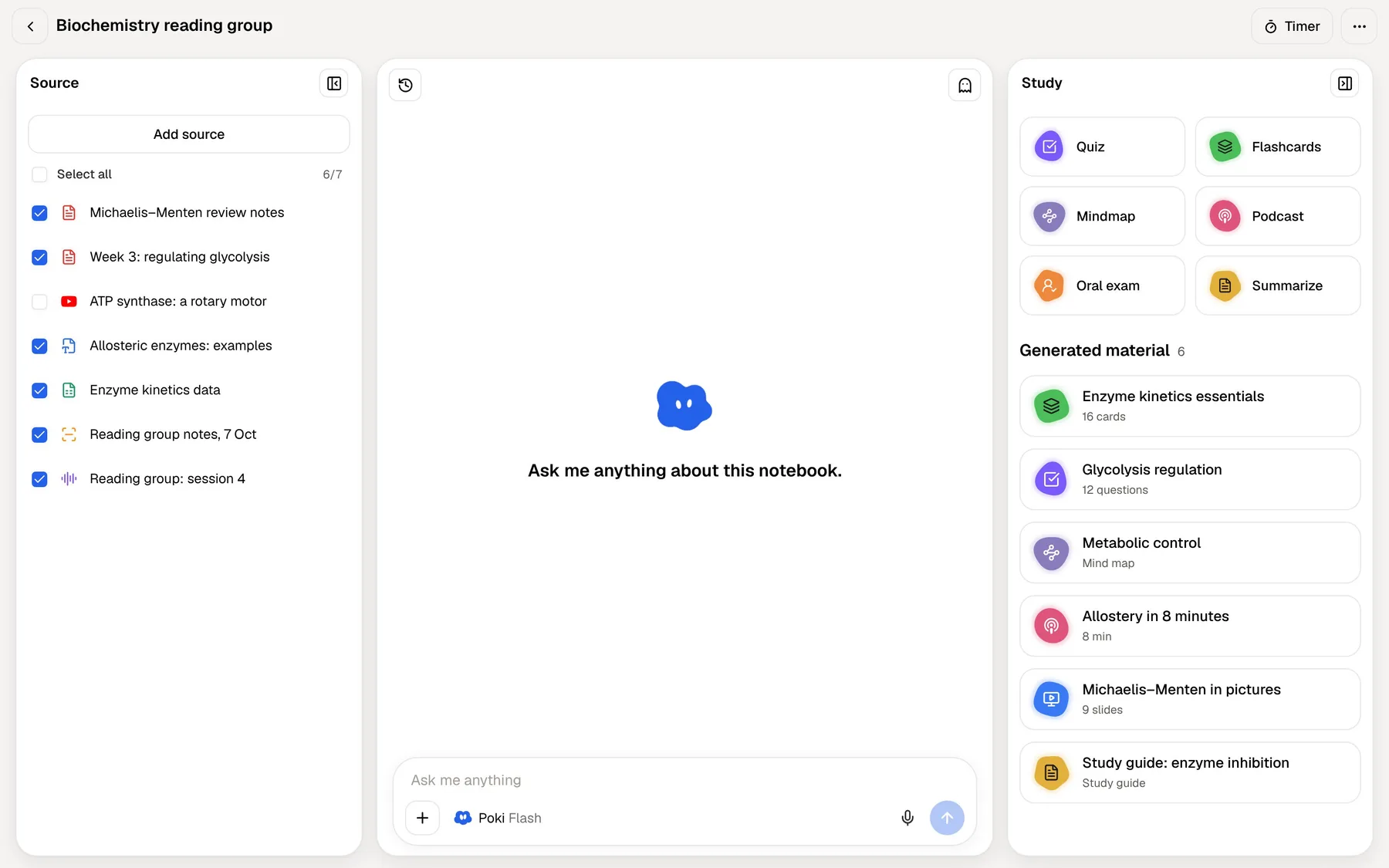
Once a module's lectures, slides and readings are in a PocketNote folder, the study tools work from all of them. A quiz gives the reason behind every answer, so a wrong choice teaches you why it was wrong. Each flashcard returns on a schedule set by your rating: Again, Hard, Good or Easy.
The oral exam goes a step further. Prof. Poki asks about the topic, out loud or in text, and follows up on whatever you left vague until you can explain it. For essay-based subjects, where marks depend on explaining mechanisms and evaluating evidence, that is useful practice.
Set the exam date in the study plan and PocketNote spreads the work across the days you have, reminds you, and tracks memory, applied and mastery scores per topic.
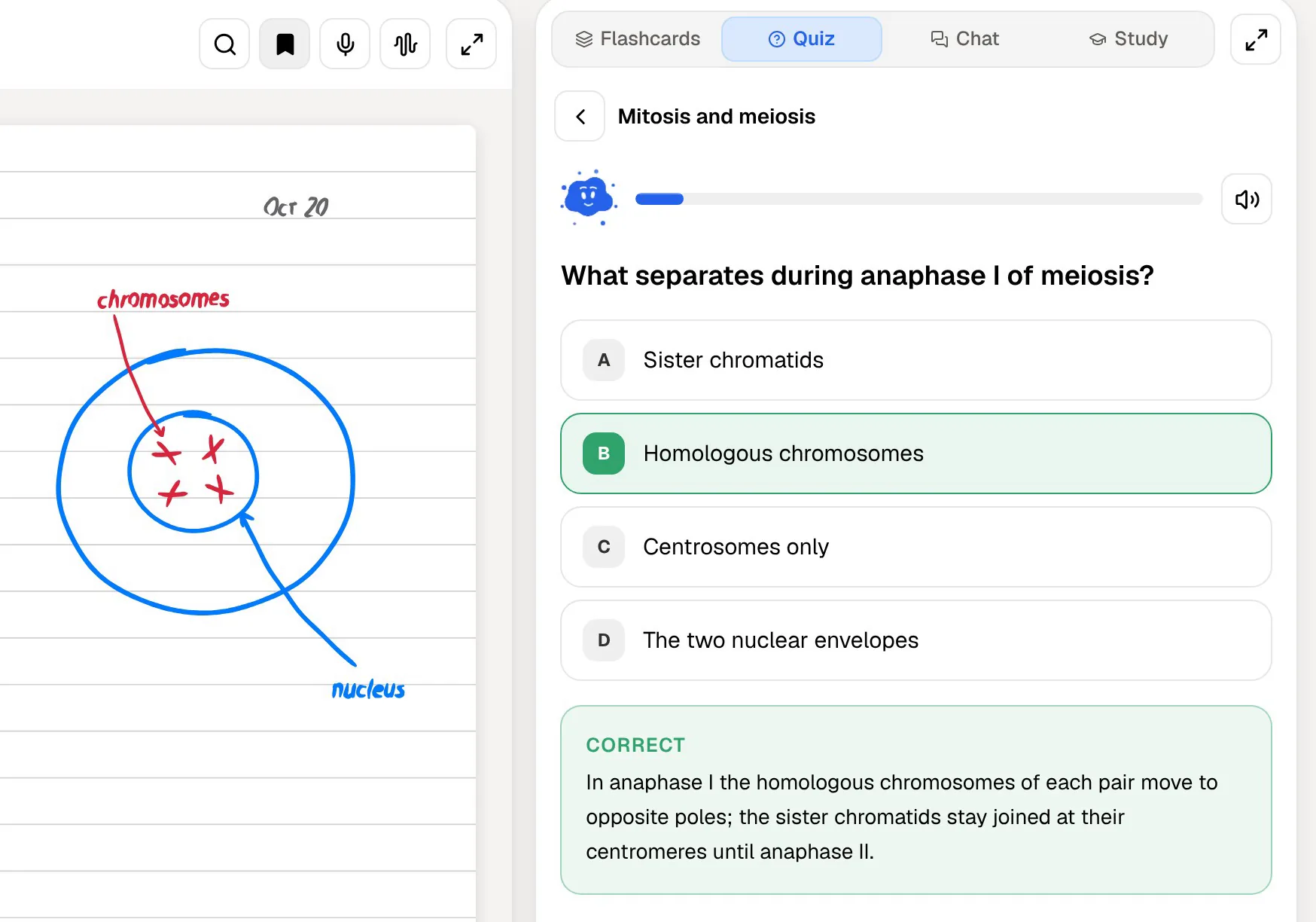
If you take lecture notes by hand on an iPad, they belong in the same folder. Handwritten notes count as sources like any other, search reaches into your handwriting, and the "tape" tool hides parts of a page so you can test yourself on your own diagrams before the quiz does.
Where Consensus is the better choice
PocketNote is not a research search engine, and it won't tell you what the literature as a whole concludes. Its built-in academic search covers arXiv and SSRN only. For these jobs, Consensus is the right pick.
- Evidence questions. "Does X affect Y?" questions in health, psychology, nutrition or policy are its home ground.
- Finding citable studies fast. Study Snapshots get you to relevant papers quickly, and citations export cleanly to a reference manager.
- Breadth. Its index is vastly larger than the arXiv and SSRN search built into PocketNote.
- Single-paper questions without uploading. Ask Paper works on papers that are already in its index.
- Seeing how papers connect. The citation graph helps you trace a debate through the literature.
What each costs, and using both together
Consensus can be used for free. Its pricing page offers individual plans and team and enterprise plans, with monthly or annual billing and a separate route for universities. The page did not display prices when we checked in November 2026, so look there for current figures. Some university libraries license Consensus for their students, so check your library's list of databases before you pay.
PocketNote is free to start. Its paid plans are Basic and Plus, and pocketnote.app has the current details.
For a typical essay-plus-exam module, split the work. Use Consensus to answer the research question your essay poses, read the strongest studies, and export the citations. Download the open-access PDFs you relied on.
Then put those PDFs into PocketNote next to the module's lecture slides and notes. Poki can now answer questions across both and cite either, and a mind map can lay out the topic so you can see where the studies fit alongside the lecture. The flashcards and quizzes you generate cover the exam, and the essay has the sources it needs.
Over a term, the routine is short enough to keep up:
- Each lecture: record it in PocketNote or import the slides as PDF, and generate flashcards the same day.
- Each essay: research the question in Consensus, check the studies behind the meter, and export the citations.
- Key studies: import the few papers your argument rests on into the module's PocketNote folder, so they show up in quizzes and the oral exam.
- Before the exam: set the date in the study plan and follow its daily list, with the audio review for days when you can't sit at a desk.
The verdict
Which one should you pick?
Pick PocketNote if…
- Your questions are about your course: the lectures, slides and readings you will be examined on.
- You want answers cited to your own files, so you can check each one against the lecture it came from.
- You want to practise with spaced-repetition flashcards, quizzes that explain every option and an oral exam.
- You record lectures or take handwritten notes and want them in the same place.
Pick Consensus if…
- You need to know what the research says on a yes/no question, with citations.
- You are writing an essay or report in health, psychology, nutrition or policy and need studies fast.
- You want citations exported as RIS, BibTeX or CSV for a reference manager.
Try it yourself
See it with your own notes
PocketNote answers from the material you give it: lecture recordings, PDFs, Word and Excel files, YouTube and web links, and your typed or handwritten notes. Poki cites the source for every answer, and the same material becomes flashcards with spaced repetition, explained quizzes, an oral exam, mind maps and audio reviews.
It is free to start on the web, iPhone and iPad. Keep Consensus for searching the literature, and use PocketNote for learning what you are taught.
Frequently asked questions
Sources
Keep reading