
Elicit is an AI research assistant for evidence synthesis. You ask a research question, it searches a corpus of more than 138 million academic papers, and it returns relevant papers, summaries, extraction tables and research reports, with a full systematic-review workflow on paid plans. Its homepage lists pharmaceutical companies, academia, policy and government, and technology firms among the people it is built for.
PocketNote works on a smaller and more personal set of documents: the slides, readings, recordings and notes for the courses you are taking. Its job is to help you learn that material, with cited answers, spaced-repetition flashcards, quizzes, an oral exam and a study plan.
So the two rarely compete for the same hour of your day. This comparison is for students who have met both, usually while writing a dissertation, and want to know which job belongs to which tool, and where Elicit is clearly the right one.
At a glance
PocketNote vs Elicit
| Feature | PocketNote | Elicit |
|---|---|---|
| Built for | Learning your course material | Evidence synthesis and literature reviews |
| What it searches | Your library; arXiv and SSRN | 138M+ papers and 545K clinical trials |
| Systematic reviews | Not offered | Screening and extraction (Pro and up) |
| Reports | Notes and summaries from your sources | Research reports, sentence-level citations |
| Tables | Data tables from a source | Extraction tables across many papers |
| Chat with a paper | Yes, cited; Poki can mark up the PDF | Chat with full-text papers |
| Flashcards with spaced repetition | Yes: Again / Hard / Good / Easy | Not advertised |
| Quizzes and oral exam | Yes, both | Not advertised |
| Lectures and handwriting | Record lectures; handwrite on iPad | Not advertised |
| Watching for new research | Not offered | Routines run scheduled searches |
| Free plan | Free to start | Basic: unlimited search and summaries |
| Paid plans | Basic and Plus; see pocketnote.app | Pro: $49 per user/month, billed yearly |
Checked against each product's own website, November 2026. Plans and features change; confirm current details there.
What Elicit is built for
Elicit treats a question as a search across the literature rather than a chat. You describe what you want to know; it finds relevant papers, summarises them and organises what they report into a table you can extend with your own columns. Its research reports follow what it calls a process inspired by systematic reviews, and it supports every AI-generated claim with a sentence-level citation to the underlying source.
Over 2026 the product has grown further in that direction. Its changelog lists a Research Agent, launched in August, that draws on literature, clinical trials, patents, regulatory and biology databases, the web and your uploaded data, and produces reports, tables, charts and slides. The systematic review workflow added support for PRISMA 2020 in May. Routines run scheduled work, such as monitoring new evidence on a topic, and email you the results.
A Library stores the papers you find, and paid plans can share collections with named colleagues. You can import from Zotero on the free plan.
What Elicit gives a student, and what it doesn't
Elicit's Basic plan is free. At the time of writing (November 2026), its pricing page lists unlimited paper search, unlimited summaries and unlimited chat with full-text papers, plus source viewing and Zotero import. Research Agent and research report usage is limited on Basic.
For an undergraduate dissertation or a master's literature review, that is a lot. You can type your research question, scan a list of relevant studies with a summary of each, open the ones that matter and ask questions about the full text. The table view is particularly good for comparing study design, sample size or outcome across ten or twenty papers at once, which is exactly the grid a literature review chapter needs.
The heavier tools start on Pro: the dedicated systematic-review workflow, which its pricing page says screens up to 5,000 papers, custom extractions from papers you upload, and API access.
Elicit's citations are worth using properly. Because each claim in a report points to a sentence in a source, you can check whether a summary matches what the paper says before you rely on it in your own writing. That habit matters with any AI research tool, and Elicit makes it easier than most.
Elicit answers the question "what does the evidence say?" Exams and vivas ask a different one: can you explain this without looking? Elicit's pricing page and changelog describe search, reports, extraction and review workflows; they don't describe flashcards, quizzes or a review schedule. That is consistent with its audience, who need accurate synthesis far more than recall.
For a student, though, both needs often arrive in the same term. The papers you found for your dissertation may be the ones your examiners question you on, and the core readings for a module are what the exam tests. Somewhere between finding a paper and being examined on it, the material has to become practice: questions you answer, mistakes you correct, and reviews spread out so the knowledge lasts.
PocketNote's paper search, stated precisely
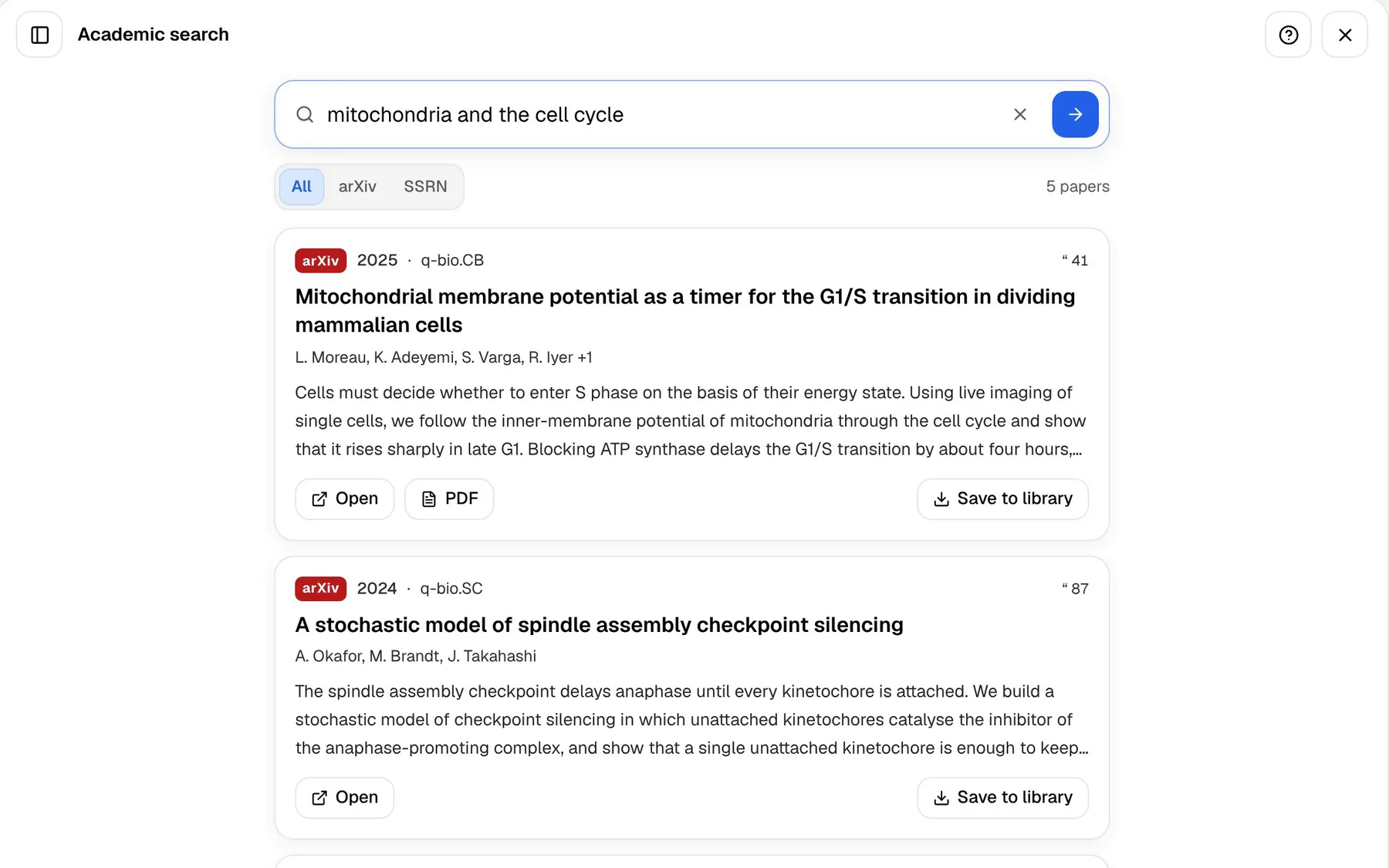
PocketNote has a built-in academic search, and it is worth being exact about its reach: it covers arXiv and SSRN. That suits physics, computer science, maths, economics, finance, law and other fields that post preprints and working papers there. It does not search PubMed, clinical-trial registries or the wider journal literature the way Elicit does, and it won't screen or rank studies for a review.
In practice, use Elicit, your library's databases or a reference manager to find papers, and bring the PDFs into PocketNote yourself. From arXiv or SSRN, a search result saves to your library in one tap; anything else comes in as a PDF import or from Google Drive, OneDrive or Dropbox.
From a saved paper to revision in PocketNote
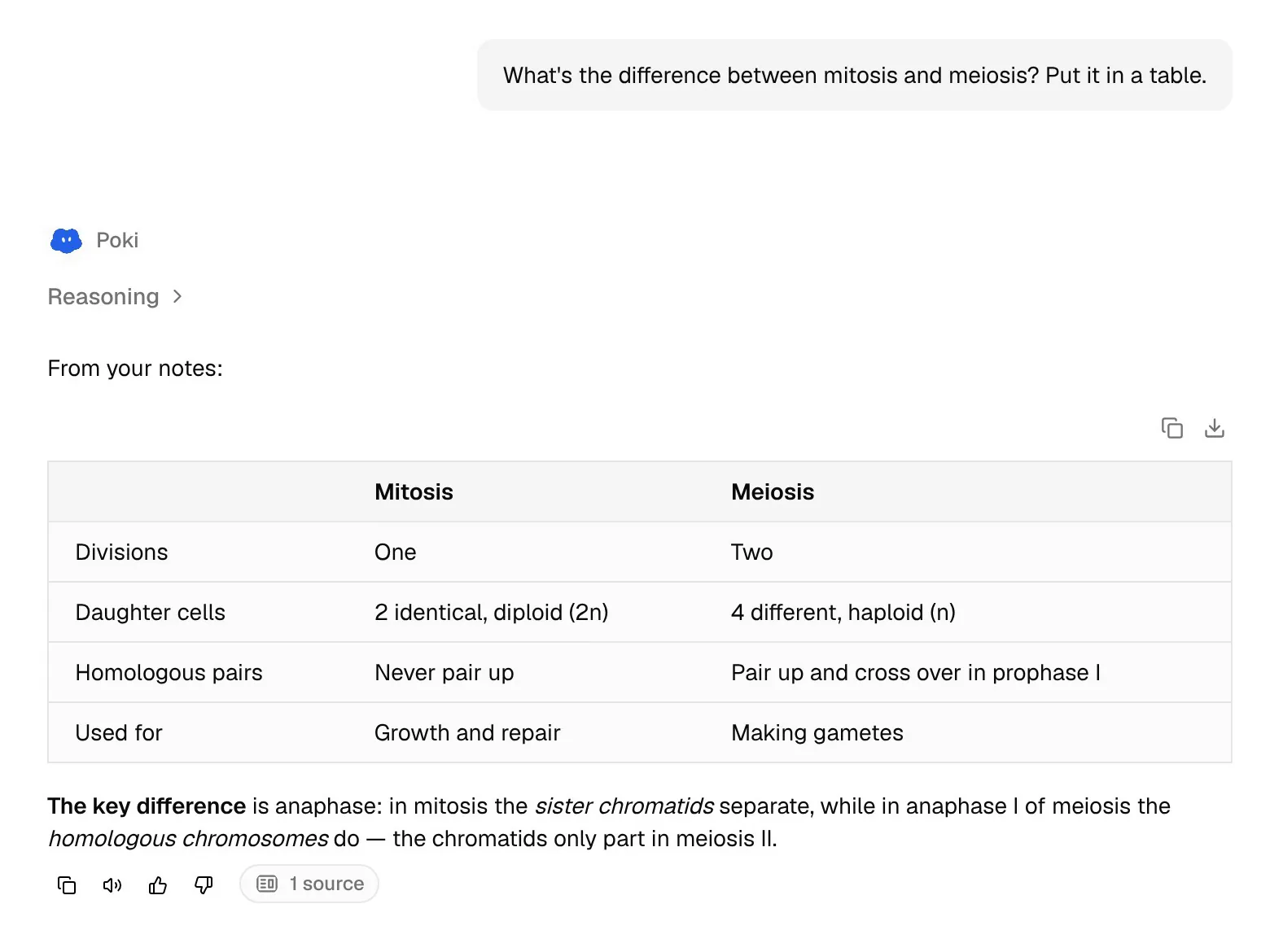
Once a paper is in your library, open it in the source viewer and ask Poki about it. Answers come from the paper with citations, so you can check each claim against the page. Poki can also look at the page as you see it, including your own highlights and handwritten margin notes, and mark passages on the PDF when you ask it to.
Then turn the paper into practice. Flashcards come back on a spaced schedule after you rate them Again, Hard, Good or Easy. Quizzes explain why each option is right or wrong. A mind map lays out the argument, and a podcast-style audio review covers it in a few minutes, with captions that follow the voices.
Because PocketNote holds the rest of your course too, a question can run across the paper and the lecture that assigned it. That is useful when a module's exam expects you to connect a study to the theory it was taught alongside.
The viva test: explaining a paper out loud
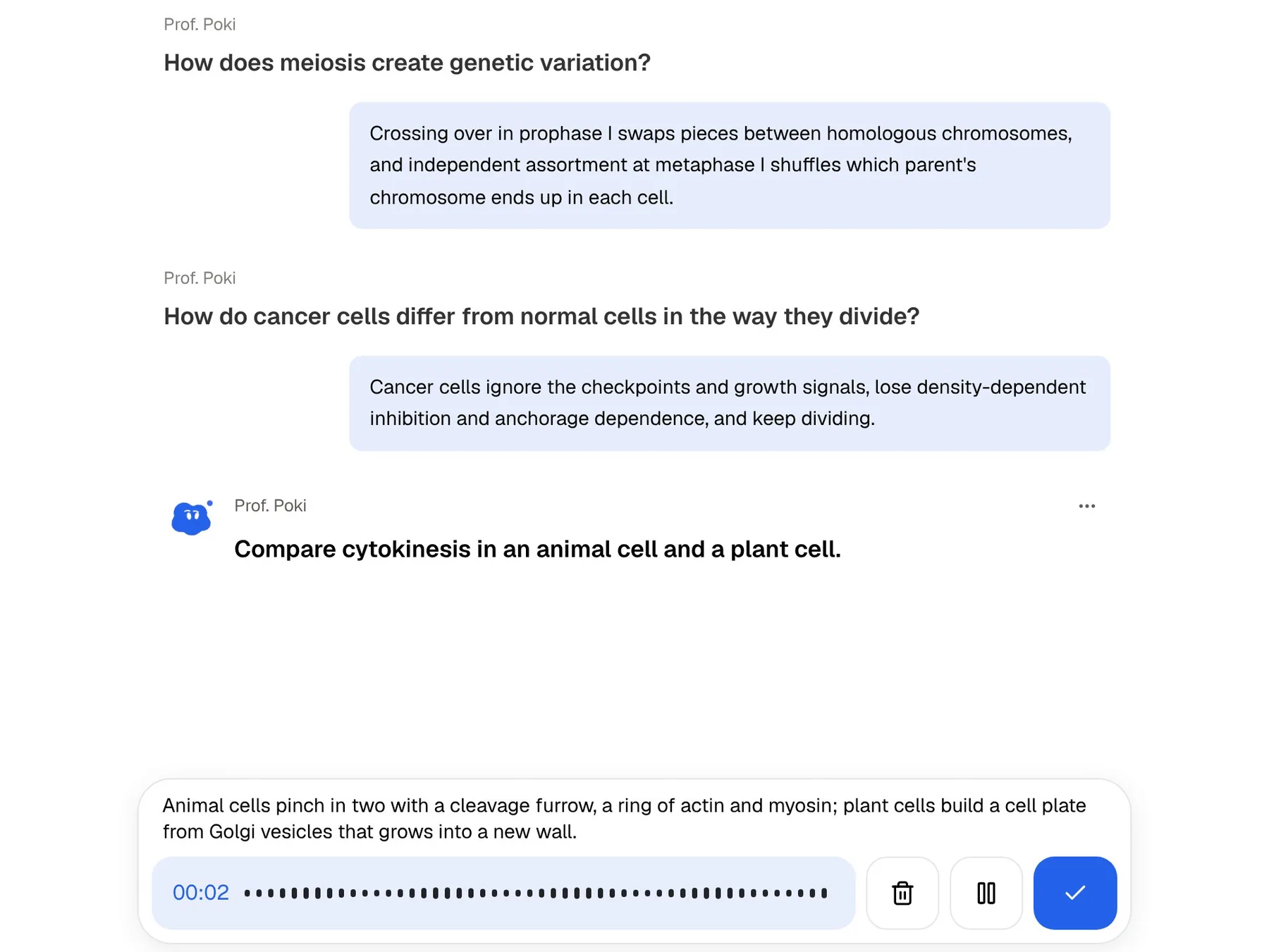
For research students, the most relevant PocketNote feature is the oral exam. Prof. Poki asks you about the material, out loud or in text, listens to your answer and follows up on whatever you left vague, until you can explain the idea properly. Before a dissertation defence, a supervision meeting or a seminar presentation, that is closer to the real event than rereading a summary.
Pair it with the study plan. Set the date of the viva or exam, and PocketNote plans what to cover each day, reminds you, and tracks memory, applied and mastery scores, so you can see which papers you can explain and which you can only recognise.
A dissertation term with both tools
The two products meet most often in a final-year or master's dissertation, where a literature review and taught modules run side by side. A split that plays to each tool's strengths looks something like this.
The order matters less than the handover. Elicit is where papers are found, compared and summarised with citations; PocketNote is where the few papers you must know well sit next to your lectures and become practice. Keeping the two jobs separate also keeps your PocketNote library small enough that the flashcards and quizzes stay focused on what you will actually be asked.
- Scoping the question. Run your research question through Elicit, read the summaries, and save promising papers to its Library.
- Comparing studies. Add columns to Elicit's table for design, sample and outcome, and use it to draft the structure of your review chapter.
- Choosing the core papers. Pick the ten or so studies your argument depends on and download their PDFs.
- Learning them. Import those PDFs into PocketNote next to your module material, ask Poki to compare their methods in a table, and generate flashcards for the definitions and findings you need to quote accurately.
- Rehearsing. In the weeks before your viva or supervision meetings, use the oral exam to practise explaining each paper, and let the study plan schedule the reviews.

Where Elicit is the better choice
If you are a researcher without exams, Elicit may be the only one of the two you need. It is clearly ahead in these jobs.
- Systematic and scoping reviews. Screening thousands of papers, recording exclusion reasons and extracting data to a protocol is what its review workflow does; PocketNote has nothing like it.
- Questions that span a field. With more than 138 million papers and hundreds of thousands of clinical trials to search, Elicit finds studies you didn't know existed. PocketNote only knows what you put in it, plus arXiv and SSRN.
- Comparing many studies at once. Extraction tables turn twenty papers into one comparable grid.
- Staying current. Routines can watch for new evidence on a topic and email you what they find.
- Biomedical and policy work. Trials, regulatory and biology databases are among the Research Agent's sources.
Pricing, and a sensible split
At the time of writing (November 2026), Elicit's pricing page lists Basic as free; Pro at $49 per user per month, billed as $588 a year; Scale at $229 per user per month, billed as $2,748 a year; and custom Enterprise pricing for companies and schools. It doesn't list a student discount, so check whether your university has an institutional arrangement before paying yourself.
PocketNote is free to start, with Basic and Plus paid plans; see pocketnote.app for current plans.
For most students the split that works is simple: Elicit to find and understand the literature, PocketNote to learn the papers and lectures you will be examined on. Try both free before deciding whether either is worth paying for.
The verdict
Which one should you pick?
Pick PocketNote if…
- You need to learn and remember your course material, not survey a field.
- You want flashcards with spaced repetition, explained quizzes and an oral exam built from your own files.
- Your material includes lectures, slides, videos and handwritten notes as well as papers.
- You are preparing for a viva and want to practise explaining specific papers out loud.
Pick Elicit if…
- You are running a systematic or scoping review and need screening and data extraction.
- You need to search well beyond arXiv and SSRN, including clinical trials.
- You want research reports with sentence-level citations across dozens of papers.
Try it yourself
See it with your own notes
PocketNote is the study side of a research workflow. Bring in the papers that matter, along with your lectures, slides and notes, and Poki answers from them with citations. From the same sources PocketNote builds spaced-repetition flashcards, explained quizzes, an oral exam with Prof. Poki, mind maps and audio reviews, and a study plan that works back from your exam or viva date.
It runs on the web, iPhone and iPad, and it is free to start. Your files are not used to train public AI models.
Frequently asked questions
Sources
Keep reading