
Memrise and PocketNote rarely compete head to head, because they are built for different jobs. Memrise teaches you to understand and speak a language: short videos of native speakers, a spaced review of the words you have learned, pronunciation practice and private AI conversation practice. PocketNote helps you study a course, any course, from the material it gives you.
They meet in one place: the student taking a language class. That student needs to speak, but also to pass an exam built on a particular textbook, vocabulary list, grammar handouts and set readings. This comparison looks at which tool handles which part, using Memrise's homepage, help centre and community-courses FAQ as of November 2026.
If you are learning a language for travel or work with no exam in sight, Memrise is the natural fit and the comparison is short. If you have a syllabus, the rest of this page is for you.
At a glance
PocketNote vs Memrise
| Feature | PocketNote | Memrise |
|---|---|---|
| Built for | Studying your course material | Learning to speak a language |
| Content | Your files, lectures and notes | Memrise courses with native-speaker video |
| Your own lists | Import CSV, Excel, PDF and more | Custom word lists (web or app) |
| Spaced review | Again, Hard, Good, Easy | Interval ladder for learned words |
| Pronunciation | Not a pronunciation coach | Record and compare your voice |
| Speaking practice | Oral exam; live voice on paid plans | Private AI conversation practice |
| Native-speaker video | Not offered | Core feature |
| Quizzes with explanations | Yes | Not advertised |
| Lecture recording | Yes: transcript, summary, notes | Not advertised |
| Exam-date study plan | Yes, with mastery scores | Not advertised |
| Languages | Study material in 50+ languages | Many, including less-taught ones |
| Price | Free to start; Basic and Plus plans | Free to start; paid plan |
Checked against each product's own website and help pages, November 2026. Plans and features change; confirm current details there.
Two different jobs
Memrise is a language course in itself. It covers a long list of languages, including less-taught and constructed ones, with official content built around real speech; Memrise's line is that every word comes with a real person saying it. You don't need to bring any material, because the course is the material. Its lists follow Memrise's own course design; a university course's lists follow a textbook and a syllabus, and the two don't always overlap.
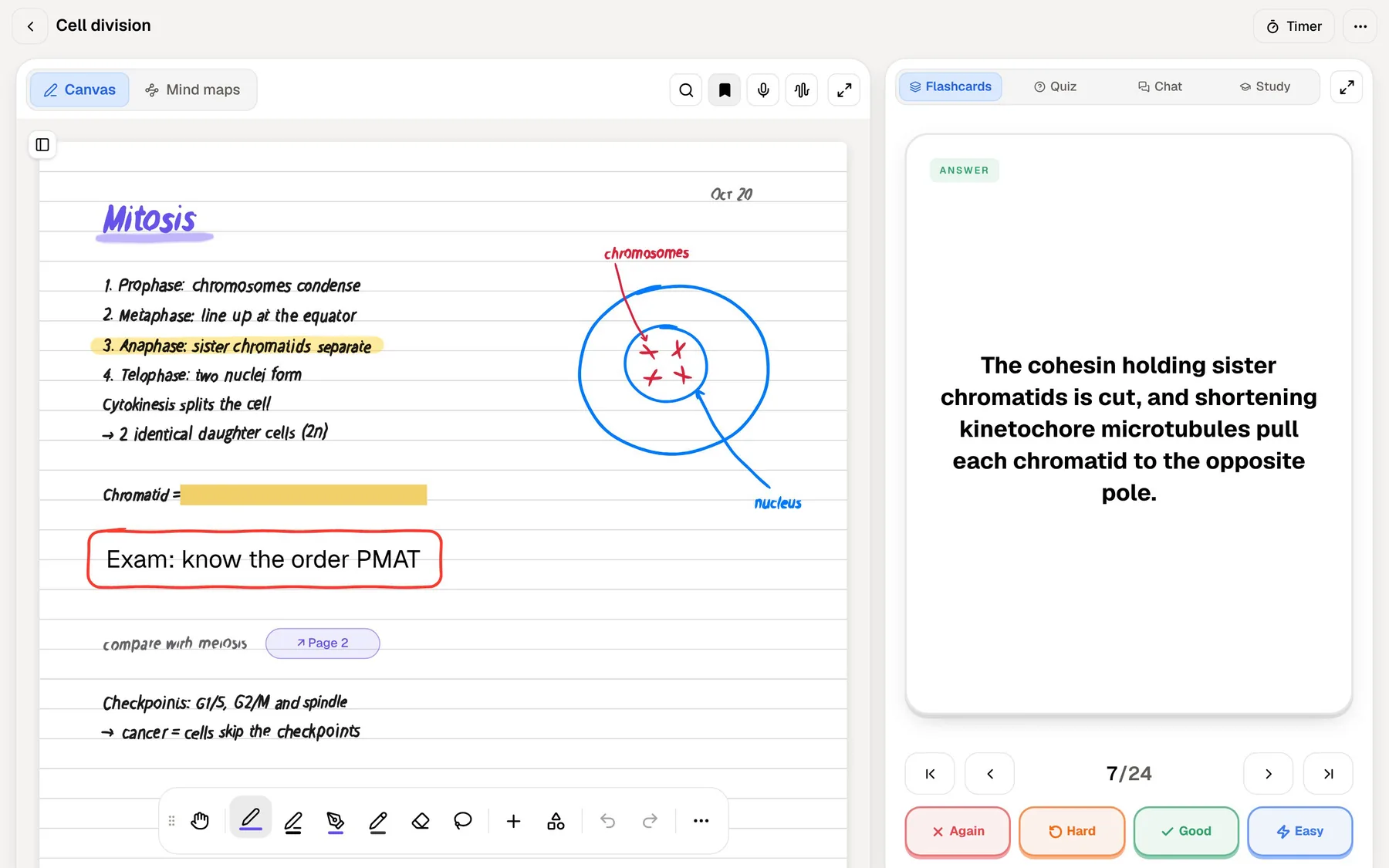
PocketNote has no language courses. You bring the content: a PDF of the textbook chapter, the vocabulary list as an Excel or CSV file, a recording of the seminar, a YouTube clip your teacher assigned. From that it generates flashcards, quizzes, summaries and more, and it can create study material in more than 50 languages, including from material in a different language.
So the useful question isn't which app is better, but which part of your language study each one should own. Most language students will find a part for each.
What Memrise does best
Memrise's core is listening to real people. Short videos of native speakers sit behind its vocabulary, so you hear words and phrases in natural speech rather than only reading them. In the browser you can tap the mic, record yourself and compare your pronunciation. The videos are the part that is hard to find elsewhere: hearing a word from real speakers is different from reading it on a card.
It also has private AI practice, which Memrise describes as practising with AI until it clicks, for trying the language in conversation without an audience, so mistakes cost nothing. Memrise has described its AI language partner as available on iOS, Android and the web.
Review is spaced. Memrise's help centre describes an algorithm that predicts when a word is likely to slip from your long-term memory, with intervals that start at hours and stretch to months. A correct review moves the word to a longer interval, and a miss sends it back to the start. Memrise describes Classic Review for working through what you have learned on its schedule, and Speed Review, which opens up after a few words and rewards fast recall.
Community courses and custom word lists in 2026
Memrise used to be known for user-made courses on almost any subject. On 31 March 2024 those community courses moved off the main app to a separate site, community-courses.memrise.com, where you sign in with your normal Memrise account. They aren't in the main app.
In 2026, user-created word lists returned to the Memrise app, starting with around 800 community courses brought across as word lists that run on the main app's learning engine. You can make a custom word list at app.memrise.com or in the app; building a full course from scratch is a desktop or web job on the community site, where older user-made courses in niche subjects also still live. If you used Memrise years ago for a non-language subject, that is where those courses went.
That makes Memrise workable for your course's vocabulary list, but it remains a vocabulary tool. Its pages don't describe importing your own documents, such as a grammar handout or a set text. In practice, your course's vocabulary list can live in Memrise as a custom word list if you are willing to enter it there.
Studying for a language class with your own material
This is where PocketNote fits. Say your French course has a weekly vocabulary list, a grammar handout and a set text. Import the list as a CSV or Excel file and PocketNote generates flashcards. Add the grammar handout as a PDF and take a quiz where every answer comes with the reason. Add the set text and ask Poki about it, with answers cited to your source. Because Poki answers from your own material, its explanation of a grammar point follows your textbook's terminology rather than a general one.
You can also record a seminar or an oral class and get a transcript, a summary and notes, or paste a YouTube link and get the video's transcript with it. If you would rather study a French text with notes in English, PocketNote can produce study material in a different language from the source.
A typical week might run like this. Monday's vocabulary list becomes a deck that evening. Wednesday's grammar handout becomes a quiz you take on Thursday, and the explanations show why the subjunctive is needed in one sentence and not another. Friday's seminar recording becomes a transcript you can search before the essay. The study plan, set to the end-of-term exam, keeps all three moving. PocketNote also covers the parts of a language degree that aren't language practice at all, such as literature, history and linguistics modules, which arrive as readings and lectures like any other course.
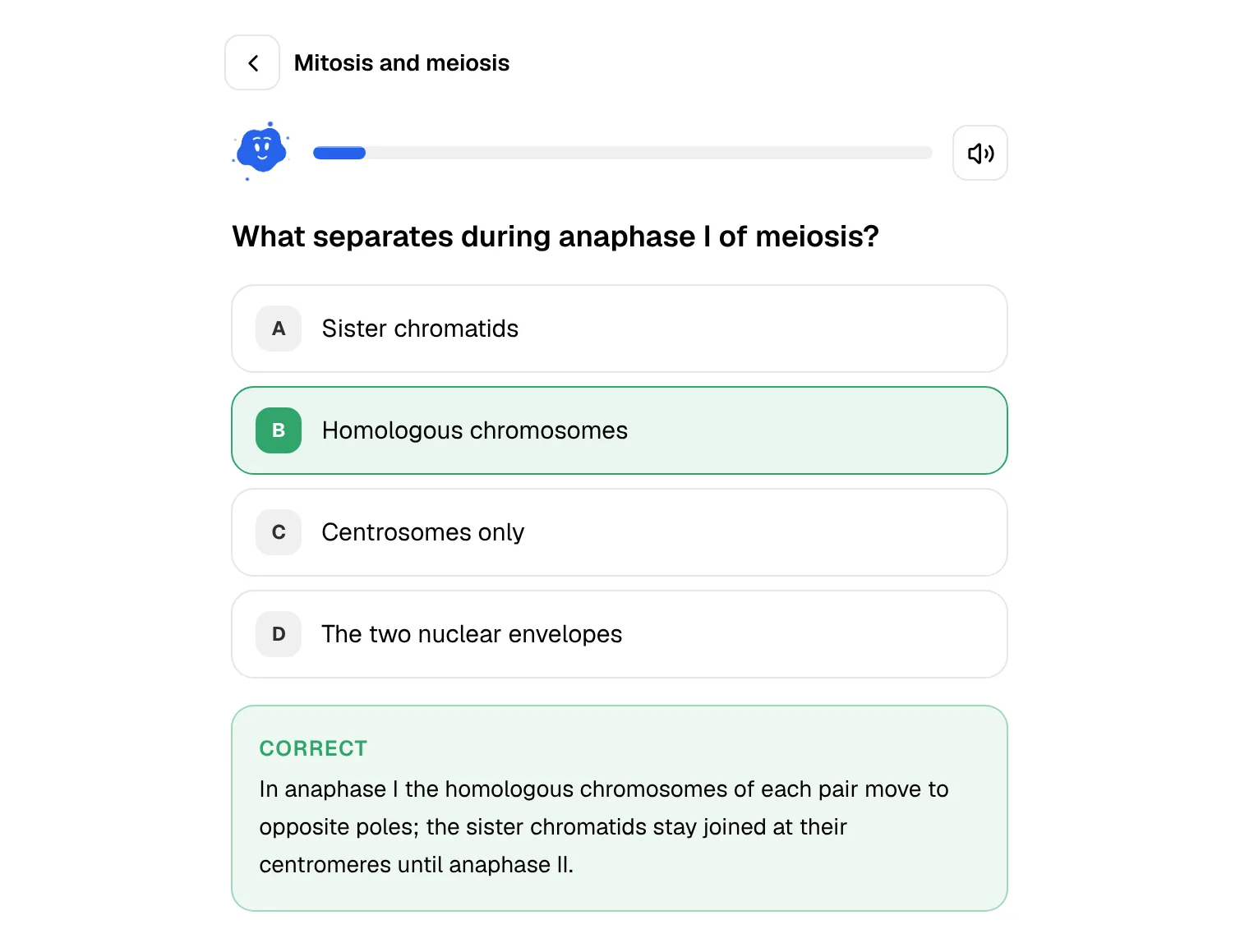
To be clear about the limits: PocketNote is not a pronunciation coach, and its oral exam tests whether you understand and can explain course material, not how fluent you sound.
Review: Memrise's ladder and PocketNote's four buttons
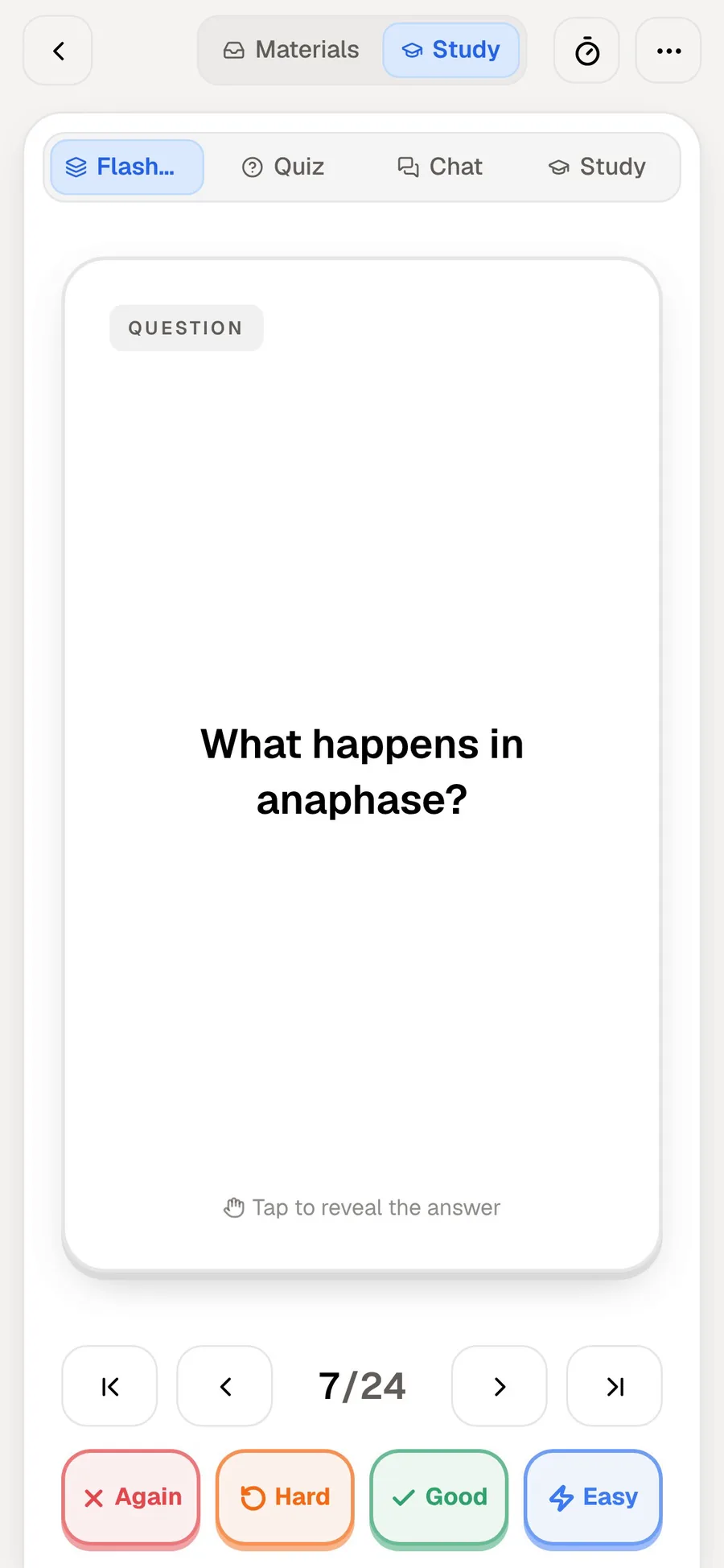
Both apps space your reviews, and both reward short daily sessions, but they ask you different things. Memrise tests you on the words you have learned and moves each one along its interval ladder when you get it right. PocketNote's flashcards ask you to rate yourself Again, Hard, Good or Easy, and bring each card back when you're about to forget it.
For vocabulary, both approaches work. Memrise's advantage is that its words come with native-speaker video and audio. PocketNote's is that the cards come from your own course list, in your teacher's wording, next to cards from everything else in the course: grammar, literature, culture.
One difference worth knowing: Memrise's published ladder sends a missed word back to the first interval, while PocketNote lets you say how hard a card felt, with Hard or Easy, not only right or wrong. If your course hands you a list of 200 words for the term, the deciding factor is whether you want them inside a language app with its own lessons (Memrise, entered as a custom list) or alongside the rest of your course material (PocketNote).
Speaking practice: conversation versus explanation
Memrise's AI practice is about using the language: holding a conversation, trying phrases, building confidence before you speak to a person.
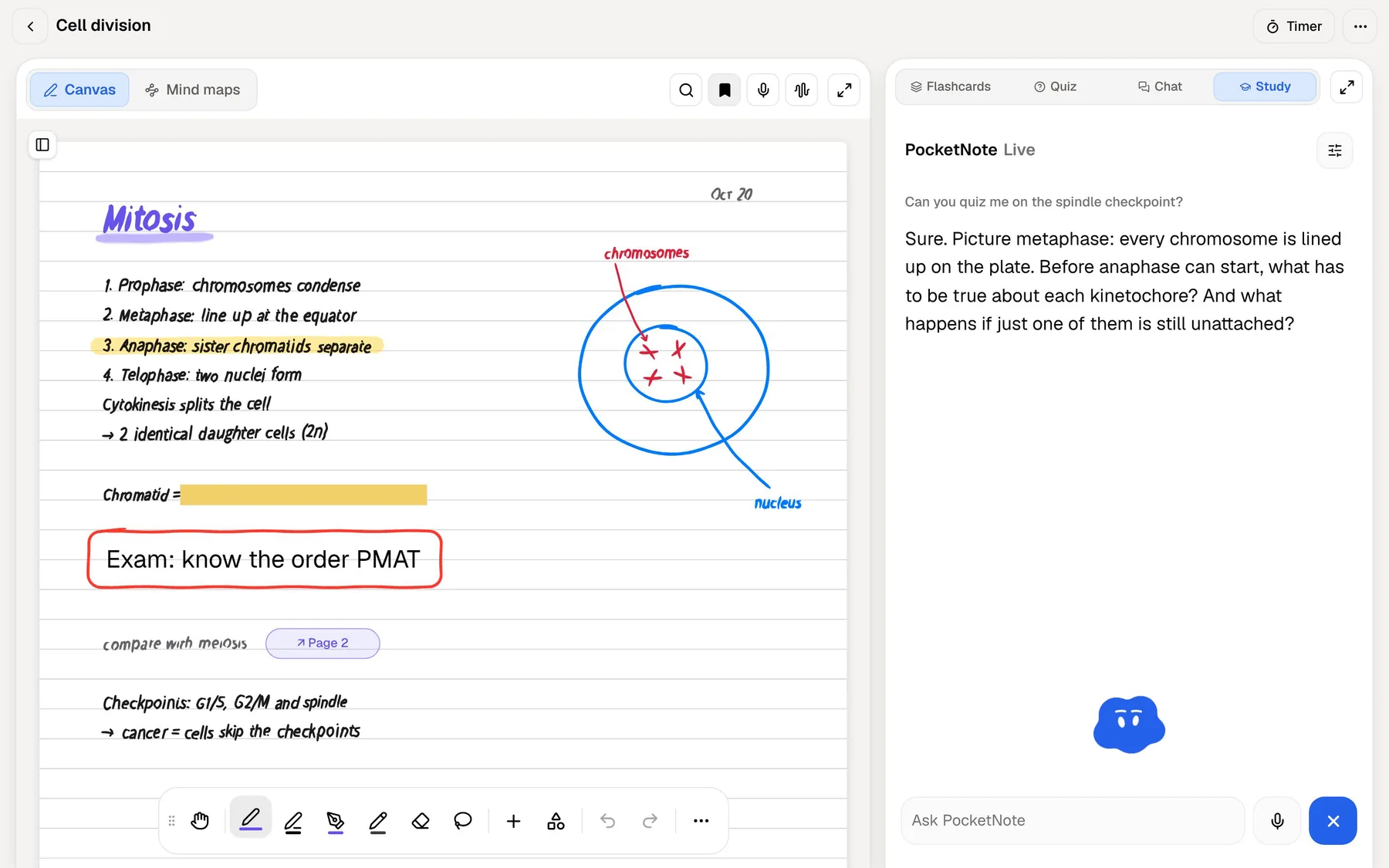
PocketNote's voice features are about understanding a subject. In the oral exam, Prof. Poki asks a question out loud or in text and keeps probing until you can explain the answer. Live voice, on paid plans, lets you talk to Poki and hear the reply, for example asking it to quiz you on a topic. That suits a literature or linguistics module, or revising how a grammar rule works, more than practising small talk.
If your course ends with a speaking exam, use Memrise and real conversation for fluency, and PocketNote's oral exam to rehearse explaining the content you will be asked about, such as a set text's themes.
Where Memrise is the better choice
For learning to speak a language, Memrise is the more natural tool. It is also the better first step if you are not yet sure you will stick with a language, since it gives you a structured path without you collecting any material. It is the better choice when:
- You want to speak and understand a language for travel, work or family, with no syllabus to follow.
- Listening to native speakers is what you need most.
- You want lessons chosen for you, rather than building study material yourself.
- You want pronunciation practice: recording yourself and comparing.
- You're learning a less-taught language that Memrise covers.
- You study on Android; Memrise has an Android app and PocketNote doesn't yet.
Cost, and using both
Memrise lets you start learning for free, and its paid plan adds extra features; current prices are on its plans page. PocketNote is free to start, with paid Basic and Plus plans; see pocketnote.app for current plans. If budget is tight, start with both free tiers and pay only for the one you open every day.
For a language student, the pairing is natural: Memrise for daily listening and speaking practice, and PocketNote for the course itself, meaning the vocabulary lists, grammar handouts, set texts and seminar recordings your exam is built on, with a study plan set to the exam date. Neither replaces speaking with people; both can make that speaking better prepared.
The verdict
Which one should you pick?
Pick PocketNote if…
- You're taking a language class with a textbook, handouts and set texts your exam is built on.
- You want flashcards and quizzes generated from your own course lists, in your teacher's wording.
- You want a study plan to the exam date covering vocabulary, grammar and readings together.
- You also study other subjects and want one app for all of them.
Pick Memrise if…
- You want to speak and understand a language, with no syllabus.
- You want native-speaker video, pronunciation practice and AI conversation practice.
- You're learning a less-taught language, or study on Android.
Try it yourself
See it with your own notes
PocketNote is for the part of a language course that lives in documents: the vocabulary list, the grammar handout, the set text and the seminar recording. It turns them into flashcards rated Again, Hard, Good or Easy, quizzes that explain each answer and a study plan to your exam date, in 50+ languages.
It is free to start on the web and on iPhone and iPad. Keep Memrise for listening and speaking, and try PocketNote on next week's vocabulary list.
Frequently asked questions
Sources
Keep reading